North Dallas Housing Market Is Cracking. Some ZIP Codes Are Down Nearly 20%

 September 15, 2026

The North Dallas housing market is getting smoked.
And that’s surprising when you consider what this area looked like only a few years ago.
Frisco, Plano, McKinney, and other northern Dallas suburbs became some of the hottest housing markets in America during the pandemic. Buyers poured into Collin and Denton counties, incomes were high, schools were highly rated, and new construction was everywhere.
Back in 2022, almost no one expected these markets to experience a serious correction.
Now prices are falling.
Some ZIP codes north of Dallas have already dropped close to 20% from their peak, while individual listings are showing even larger losses.
Inventory has also surged.
Those shifts are creating a very different housing market heading into 2027.
North Dallas Housing Market Is Correcting Despite Strong Fundamentals
North Dallas isn’t the type of place most people would expect to experience a major housing correction.
Collin and Denton counties contain some of the wealthiest suburbs in Texas. The region has attracted major corporate offices, technology companies, and high-income households for years.
Schools are another major attraction.
Frisco, for example, contains highly rated schools that have historically helped support housing demand from families. Frisco’s school quality illustrates why this correction is so notable. The property shown in this example is served by schools rated 9/10, 9/10 and 10/10 by GreatSchools, yet strong school ratings haven’t prevented substantial housing-market weakness.

Strong schools, high incomes, and desirable neighborhoods haven’t stopped prices from falling.
Some individual properties currently on the market now carry asking prices approximately 26% below their levels from two years ago. The individual listing data shows how severe the correction can become at the property level. One North Dallas listing now has an estimated market value of roughly $501,700, down 26% over the last two years. The seller has also repeatedly cut the asking price during 2026.

This is an enormous reversal for an area that was widely considered one of the safest housing markets in Texas.
And the declines aren’t limited to distressed individual listings.
Some North Dallas Housing Market ZIP Codes Are Down Nearly 20%
The correction now extends across multiple ZIP codes.
Some northern Dallas ZIP codes have already recorded home-value declines approaching 20% from their peaks.
Frisco and surrounding areas also show significant weakness. The ZIP code data confirms that these declines extend well beyond a single neighborhood. ZIP 76227 has dropped roughly 18.8% from its 2022 peak, while 75068 has fallen 17.3% and 75009 has declined 16.6%.

A single seller taking a 20% or 25% loss can be dismissed as an isolated situation. Maybe they overpaid. Maybe they need to relocate quickly. Maybe the property has problems.
But when entire ZIP codes begin recording double-digit declines, the story changes.
This is evidence of a broader market correction.
And the biggest explanation is relatively simple.
There aren’t enough buyers at today’s prices.
Buyer Migration Into North Dallas Has Slowed
The Dallas housing boom was fueled by migration. People moved to North Texas from expensive states such as California and New York. Many arrived with high incomes or significant equity from homes they sold elsewhere.
It gave them enormous purchasing power in Texas.
A $700,000 house in Frisco could look relatively affordable to someone selling a much more expensive property in California.
That demand helped push North Dallas prices higher.
But migration-driven demand isn’t as powerful as it was several years ago.
The flow of buyers moving into Dallas and its northern suburbs has slowed, particularly compared with the pandemic boom.
This leaves builders and existing homeowners competing for a smaller pool of buyers.
Return-to-Office Is Creating Another Housing Problem
There’s another potential source of pressure.
Some households that relocated during the remote-work boom are now facing stricter return-to-office requirements.
For certain workers, that can mean returning to employment centers in states such as California or New York.
Even a relatively small reversal matters.
During the boom, migration added buyers while available housing remained constrained.
Now the equation is changing.
Fewer incoming households mean less incremental demand. At the same time, some existing residents leaving the area can add homes back onto the market. That creates exactly what sellers don’t want: more supply and fewer buyers.
And there’s another demand source worth watching.
North Dallas Housing Market Is Exposed to Tech and Immigration Trends
Collin and Denton counties have significant technology and IT employment. That has made northern Dallas a destination for highly skilled immigrant workers, including households connected with the H-1B visa program.
During periods of strong technology hiring and immigration, those workers can contribute to meaningful housing demand in communities close to major employment centers.
But that demand isn’t guaranteed.
If technology hiring weakens, immigration slows, or fewer visa-dependent households enter the buyer pool, housing markets with unusually high exposure can feel the impact.
That doesn’t mean H-1B buyers caused the North Dallas housing correction. The market is much larger and more complicated than any single buyer group.
Affordability, mortgage rates, migration, new construction, and elevated inventory are all important. But the larger point remains: North Dallas needs continued household growth to absorb its housing supply.
And right now, demand isn’t keeping pace.
Surging Inventory Is Giving Buyers More Leverage
Inventory may ultimately be the most important part of this story. North Dallas experienced enormous development during the housing boom.
Builders responded to population growth by constructing subdivisions across Collin and Denton counties. That worked when buyers were arriving rapidly.
But housing supply doesn’t disappear simply because migration slows.
New homes continue to hit the market. Existing homeowners list properties. Relocating households adds more inventory.
Suddenly, buyers have options.
Instead of competing against 10 other offers for one house, they can compare properties and negotiate.
Sellers then need to cut prices.
Listings sit longer.
And comparable sales gradually reset lower.
This is how a housing correction spreads from a handful of properties to an entire ZIP code.
Why Wealthy Suburbs Aren’t Immune From Housing Corrections
There’s an important lesson emerging from North Dallas.
Good schools don’t guarantee rising home prices.
High household incomes don’t guarantee rising prices either.
Neither do technology jobs or population growth.
Housing still comes down to the relationship between price, supply and demand.
A fantastic suburb can become a bad housing market if homes become too expensive relative to what buyers are willing or able to pay.
That’s increasingly what appears to have happened north of Dallas.
This pandemic boom pulled demand forward and pushed prices rapidly higher.
Builders responded by adding supply.
Then migration slowed, and affordability deteriorated.
Now the market is adjusting.
More North Dallas Housing Market Declines Could Come in 2027
The correction may not be finished.
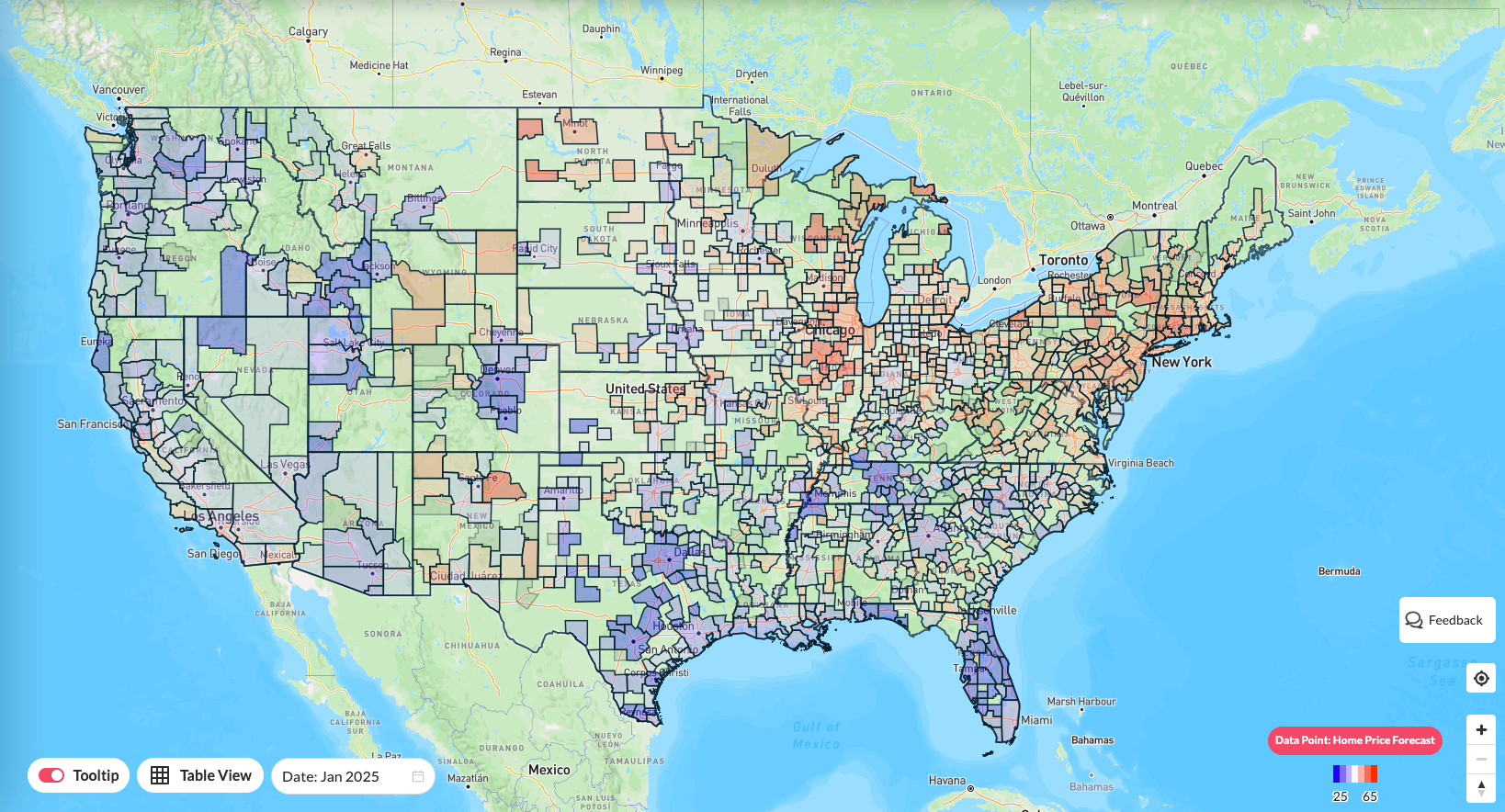
Reventure is forecasting continued weakness across portions of North Dallas heading into 2027, particularly in areas where inventory remains elevated and prices haven’t fully adjusted to weaker demand. It doesn’t mean every neighborhood in Collin or Denton County will decline by the same amount.
Housing corrections are extremely local.
One ZIP code could fall substantially while another nearby market remains relatively resilient.
But some northern Dallas ZIP codes are already down close to 20%, demonstrating how dramatically conditions have changed.
This was one of America’s most celebrated pandemic housing markets.
Now sellers are cutting prices, inventory is elevated, and the migration demand that helped fuel the boom has weakened.
Buyers suddenly have leverage.
And if supply remains high going into 2027, North Dallas may need lower prices to bring enough buyers back into the market. The important thing for buyers is that these corrections can vary dramatically from one ZIP code to another. That’s why looking only at Dallas-wide or even county-wide statistics can hide what is happening in an individual neighborhood.

You can search your ZIP code in the Reventure App to see local home-price forecasts, inventory trends, and other housing-market data for 2027.