A major housing headwind is approaching. And it has almost nothing to do with mortgage rates. The Baby Boomer Housing Exodus could become one of the biggest forces reshaping the U.S. housing market over the next decade as millions of older homeowners move through retirement and eventually age out of their homes.
That transition could create a major increase in housing supply at exactly the same time that the population entering traditional retirement age starts shrinking.
The biggest risks are concentrated in retirement-heavy markets across Florida and Arizona.
And the demographic shift has already started. The demographic reversal becomes much clearer when you look at the age distribution. The 55–64 population surged for two decades, but that cohort is now shrinking just as the 75+ population begins accelerating.

Baby Boomer Housing Exodus Is About to Accelerate
The Baby Boom generation delivered an enormous demand tailwind to the housing market over the last 25 years.
In 2000, Americans between the ages 55 and 64 accounted for roughly 8.6% of the population. By 2020, that share had surged to around 13.1%.
In raw numbers, the change was even more dramatic.
The 55-64 population increased from roughly 24.3 million people in 2000 to 43.4 million in 2020.
That nearly 20 million-person increase helped fuel demand in retirement destinations such as Florida and Arizona.
Millions of Americans reached their late 50s and early 60s with accumulated home equity, retirement savings, and the ability to relocate.
Many bought homes in warmer and cheaper retirement markets.
But that demographic tailwind is now reversing.
The 55-64 population has already fallen to roughly 41.2 million and is expected to continue declining over the coming decade. Looking at the raw population totals makes the shift even more striking. The massive 55–64 retirement wave that began around 2000 is rolling into progressively older age groups, while the next generation of retirement-age buyers is smaller.

That means fewer Americans are moving into the age range that historically generated significant demand for retirement housing. At the same time, the enormous Baby Boomer population is moving into older age groups.
That creates a completely different housing equation.
Baby Boomer Housing Exodus Creates a Supply and Demand Double Whammy
Think of the Baby Boom generation as a demographic wave moving through the housing market.
The first major increase occurred in the 55-64 age bracket from roughly 2000 through 2020.
Then came the 65-74 population. That cohort began increasing rapidly around 2010 and is expected to peak around 2030.
Now the next wave is appearing. The 75-and-older population began accelerating around 2020 and could continue climbing toward 2040.
This represents Baby Boomers moving from early retirement into traditional retirement, and eventually into the age when many homeowners leave their properties.
Meanwhile, Gen X is roughly 20% smaller than the Baby Boomer generation.
So the generation immediately behind the Boomers simply does not contain the same number of potential buyers.
By around 2037, there could be more Americans over age 75 than Americans between ages 55 and 64.
That would be unprecedented in modern U.S. history.
For housing markets heavily dependent on retirees, the consequences could be significant.
Supply rises.
Demand weakens.
And prices face pressure.
Why Aging Baby Boomers Could Put More Homes Up for Sale
One common argument is that Baby Boomer homes will simply remain within families.
But inheritance data suggests many will eventually reach the open market.
Studies cited in the discussion around inherited housing suggest that a majority of inherited homes are ultimately sold. That assumption is supported by surveys of future heirs. Rather than holding inherited real estate indefinitely, many expect to sell the property and take the proceeds.

One survey found that 56% of people who inherited a home ended up selling it. Other estimates suggest the figure could approach 70% among future inheritors.

The reason is straightforward.
Children often live in another city or state.
They may already own homes.
And many have little interest in becoming long-distance landlords responsible for maintenance, taxes, insurance, and tenants.
For those heirs, receiving cash from a sale is often more practical than keeping the property.
Some homes may also be sold before inheritance occurs as older homeowners downsize, enter assisted living, move closer to family, or otherwise leave their longtime residences.
Either way, aging demographics are likely to translate into more listings over time.
Florida Faces the Biggest Baby Boomer Housing Exodus Risk
The impact will not be evenly distributed across America.
This is primarily a local housing-market story.
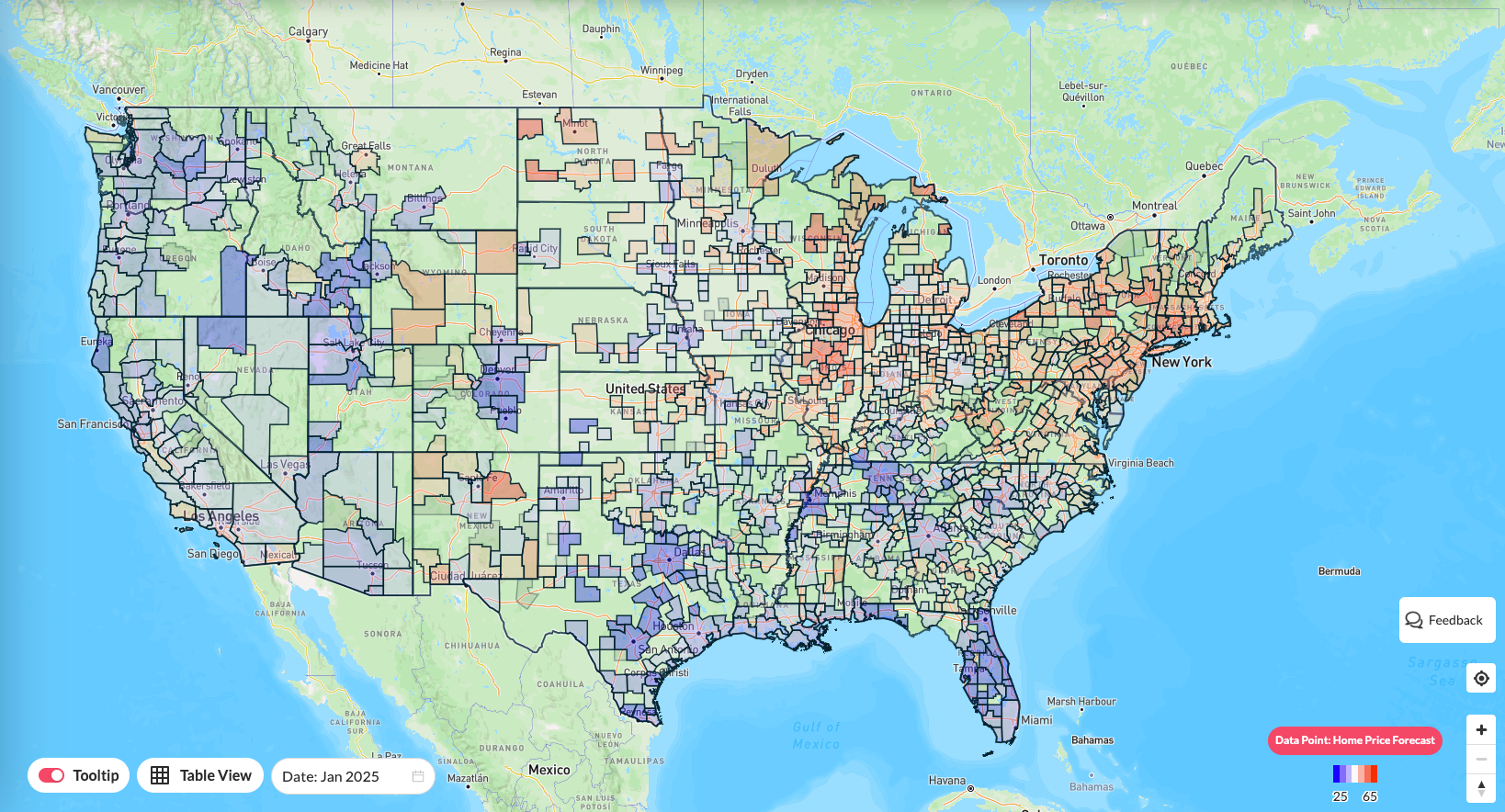
One metric we are closely watching at Reventure is the percentage of homeowners over age 75. The statewide numbers already show where the demographic exposure is concentrated. Florida ranks first among states in the share of homeowners aged 75+, while Arizona ranks second.

Markets with unusually high concentrations of older homeowners potentially face greater future supply pressure.
Florida stands out.
More than 18% of owner-occupied homes statewide are owned by people over age 75, putting Florida among the most exposed states to this demographic transition.
Arizona also ranks near the top.
But the differences become much bigger when you examine individual metros and counties.
Naples is one example.
Roughly 29% of homeowners in the Naples area are over 75. The statewide figure masks much larger concentrations inside individual Florida markets. Southwest Florida stands out, with several retirement-heavy areas already showing extremely high shares of elderly homeowners.

Meanwhile, retirement-heavy areas including The Villages, Sarasota, Ocala, and Punta Gorda also appear particularly exposed to aging-related supply.
The contrast within Florida is enormous.
In Orange County, home to Orlando, only around 11% of homeowners are over the age of 75.
That makes Orlando considerably less exposed to this particular demographic risk.
Sumter County, home to The Villages, is completely different.
Around 41% of homeowners there are over 75. That contrast shows why this cannot be treated as a statewide Florida story alone. Two markets only a short distance apart can have completely different demographic risk profiles.

That is an extraordinary concentration of properties that could potentially turn over as the population ages.
Younger Buyers May Not Rescue Every Retirement Market
Millennials and Gen Z represent the strongest argument against a long-term housing glut.
Millions of younger Americans remain priced out of homeownership today.
If affordability improves, they could eventually absorb a significant amount of housing inventory.
But there is a geographic problem.
A 35-year-old buyer who can finally afford a home is not necessarily going to move to a retirement-oriented market with a median age near 50.
Younger households generally prioritize employment opportunities, schools, amenities, and communities with other working-age residents.
That means Millennials and Gen Z could increase national housing demand while still failing to replace disappearing retiree demand in places like Sarasota or Naples.
Other regions may be better positioned.
Texas and parts of the Mountain West have comparatively larger populations of homeowners ages 25-44. The reverse side of the demographic story is the concentration of younger homeowners. Markets with a larger base of owners between the ages of 25 and 44 may have more built-in demand to absorb future inventory

Those younger ownership bases could make these markets more resilient to the aging transition.
Florida, parts of Arizona, the Northeast, the Southwest, and California may face greater exposure where older ownership rates are high and younger ownership rates are low.
Demographics Could Become Housing Destiny
The Baby Boomer Housing Exodus is not a short-term housing cycle.
It is a long-term demographic transition that has been building for decades.
The Americans who entered their peak retirement-moving years 20 years ago are now becoming the older homeowners most likely to eventually leave their properties.
Meanwhile, the generation behind them is smaller.
That means retirement-focused markets could experience both increasing supply and structurally weaker demand.
Florida and Arizona deserve particularly close attention.
For buyers and investors, demographics should therefore become part of housing-market due diligence.
Markets with fewer homeowners over 75, more homeowners between 25 and 44, and stronger long-term population fundamentals should generally be better positioned to withstand this demographic shift.
And areas dominated by aging owners deserve more caution.
You can track these demographic metrics for your city on Reventure, including homeowner age distribution and other long-term population indicators, in the Demographic data section.

Because over the next decade, knowing who owns the homes in a market may become just as important as knowing how much those homes cost.