Mortgage Rates Drop to the Lowest Level in A Year. Should You Buy Now?

 September 8, 2025

Mortgage rates just hit the lowest level in a year. The 30-year fixed is now at 6.29%, down 0.16%. Fifteen-year loans dropped to 5.60%. Even jumbo loans slid to 6.25%. For buyers watching the market, this is a major shift.
So, what does it mean for you? A year ago, rates were higher. Affordability was tighter. Today, you’ve got more room to act. Sellers are paying attention too. Should you buy now, lock in, or wait? Let’s break down the numbers and explore the opportunities hidden within them.
Why Today’s Lower Mortgage Rates Matter More Than Ever?
Mortgage rates just hit their lowest point in a year. The 30-year fixed is now 6.29 percent, down 0.16 percent today. Fifteen-year loans dropped to 5.60. Even jumbo loans slipped to 6.25. Buyers are seeing real relief.
The gap between fixed and adjustable is nearly gone. The 7/6 ARM is 5.59. That makes fixed loans more attractive and safer. Fifteen-year loans still carry a big discount, but payments are heavier. FHA and VA options are both under 6, giving first-time buyers a break.
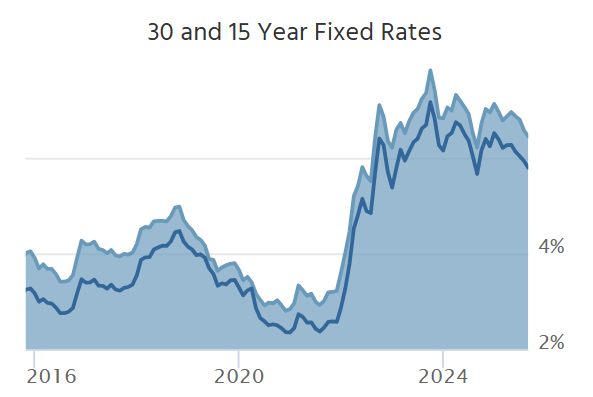
Mortgage rates dip to their lowest level in a year, easing from the 2023–2024 highs. Access the above chart here. [Link]
The chart shows the climb from 2021 highs has cooled in 2025. We are trending lower, but not smoothly. Volatility is still in play. Rates can swing fast. For now, though, buyers have a window to act.
Affordability and Local Mortgage Trends in the US
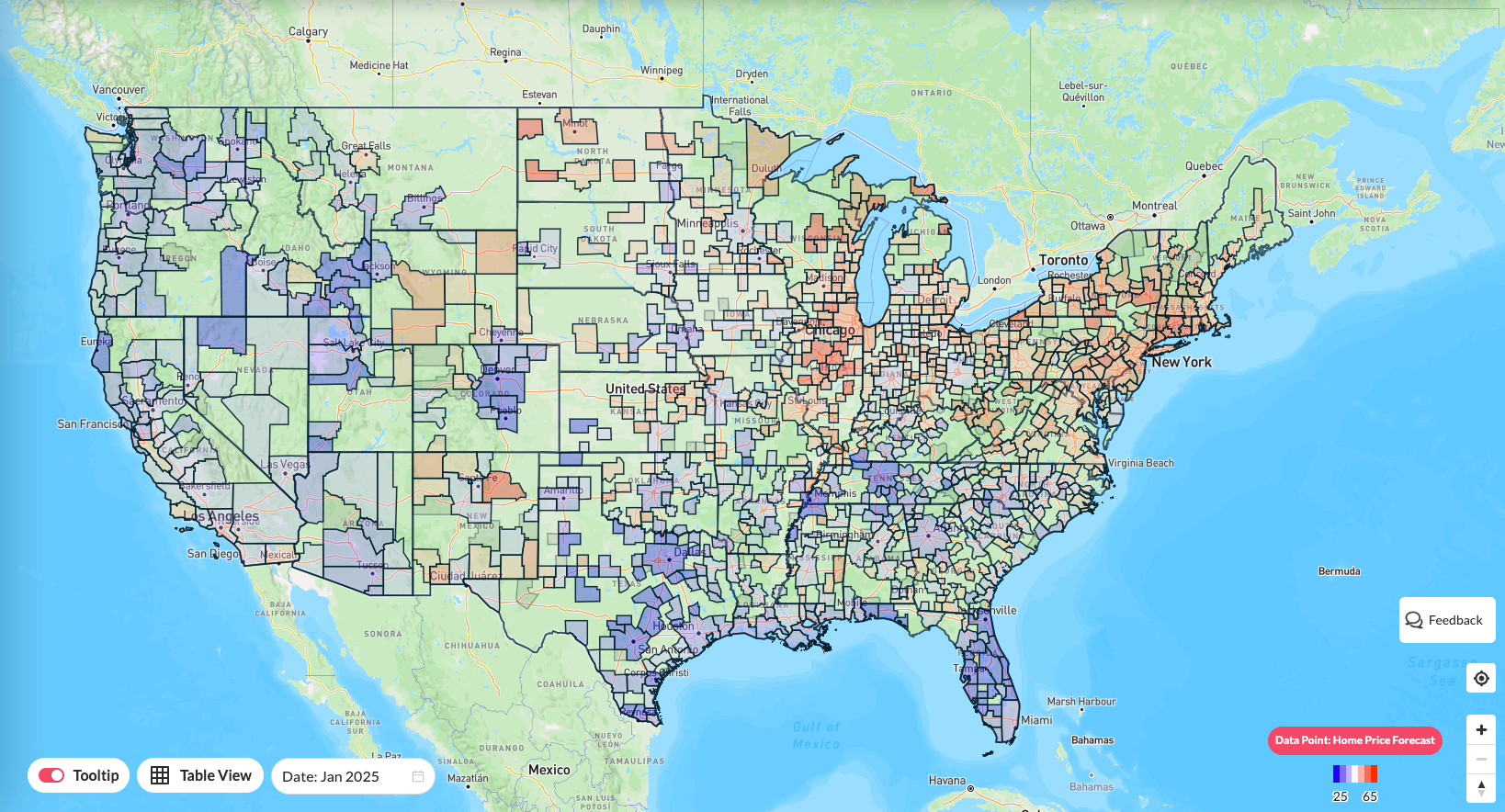
Mortgage rates are falling, yet affordability still depends on location. Metro-level data shows wide differences in home value growth, price cuts, and household strain.
 Metro markets reveal sharp contrasts with cities like Tampa and Miami cooling. While Rochester and Buffalo show resilience. Access the above table here. [Link]
Markets Facing Price Drops
Several large metros are showing signs of stress despite falling national mortgage rates. Tampa has seen home values fall by 5.6 percent in the past year. More than a third of its listings have price cuts, which signals motivated sellers. Miami tells a similar story. Prices are down 3.6 percent, yet the value-to-income ratio is 5.9, making it one of the least affordable markets on the list. Tucson and Houston are also negative on growth, with declines of 2.6 percent and 1.7 percent, showing that price pressure is not limited to Florida.
Metros Showing Stability
Some metros are holding steady with modest growth. Tulsa has gained 2.2 percent, with 30.3 percent of listings still cutting prices. Pittsburgh is up just 0.9 percent but has affordability on its side, as its value-to-income ratio is only 3.0. These smaller gains may reflect markets where supply and demand are better balanced.
Stronger Performers
Not every metro is cooling. Rochester is up 4.1 percent year over year, with only 8.4 percent of listings cutting prices. Buffalo and Detroit are each showing 3.1 percent growth. However, Buffalo is highly stretched with 29.1 percent of homes overvalued, while Detroit faces similar pressure at 29.0 percent.
Turn Mortgage Trends Into Market Advantage
Local conditions are shaping affordability far more than the national averages suggest. A buyer in Tampa may find more negotiating power compared to a buyer in Rochester, where competition is tighter. Falling mortgage rates open the door to better deals, but buyers need to weigh overvaluation, income ratios, and local growth before making a move.
To help make sense of the shifting mortgage rates for your own market, go to Reventure App. It offers mortgage payment as % of income, mortgage home %, and mortgage payment, all the way down to the ZIP code, for just $49/ month.
Localized insight from Reventure App empowers buyers to spot neighborhoods with the lowest pricing. It also helps sellers align with current market realities, making it easier to make smarter, better-timed decisions in a cooling, yet still competitive, housing market.






One Response