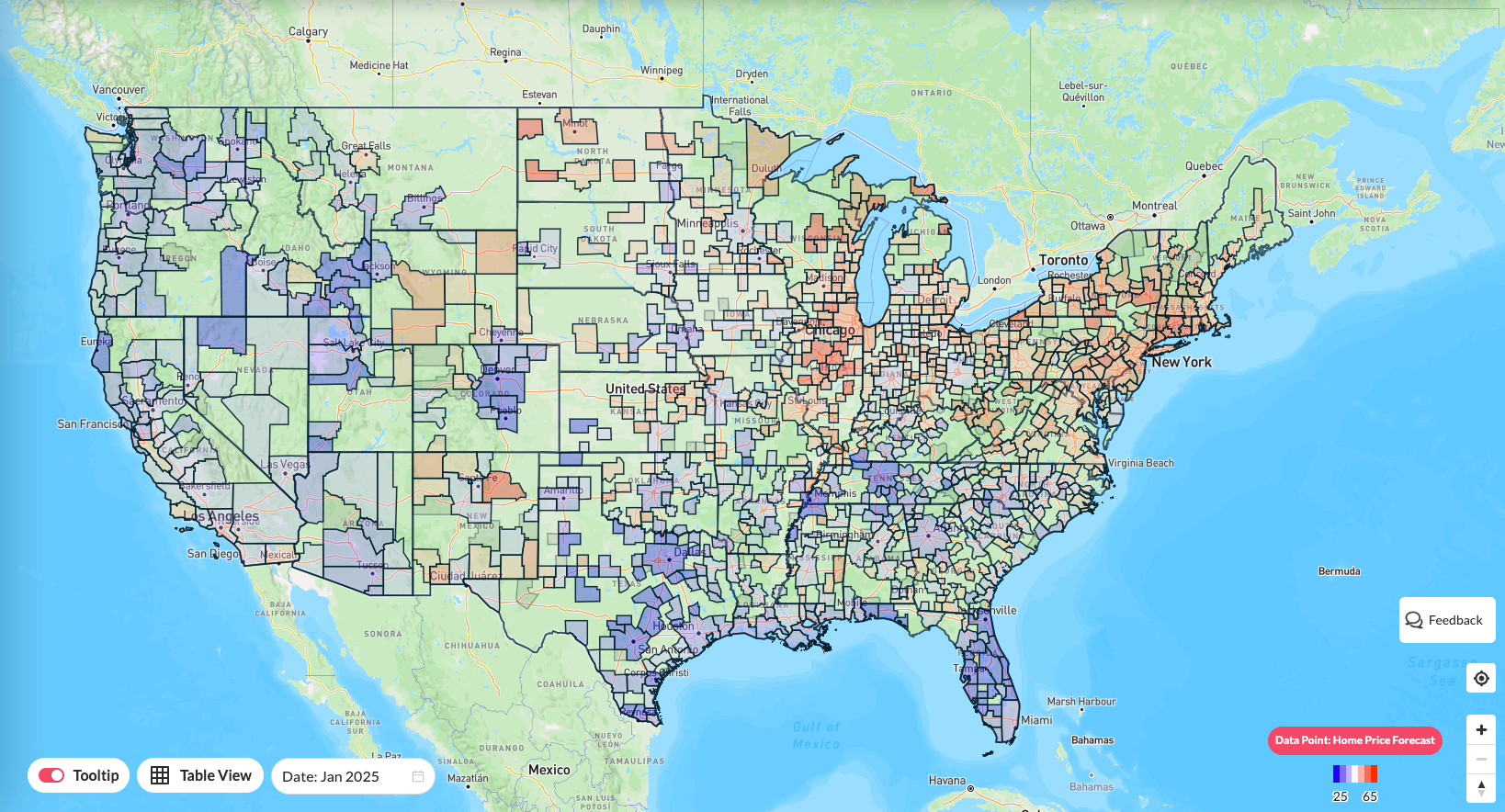
The Atlanta Housing Market Reversal (why home prices are down 43% in some areas)

 July 22, 2026
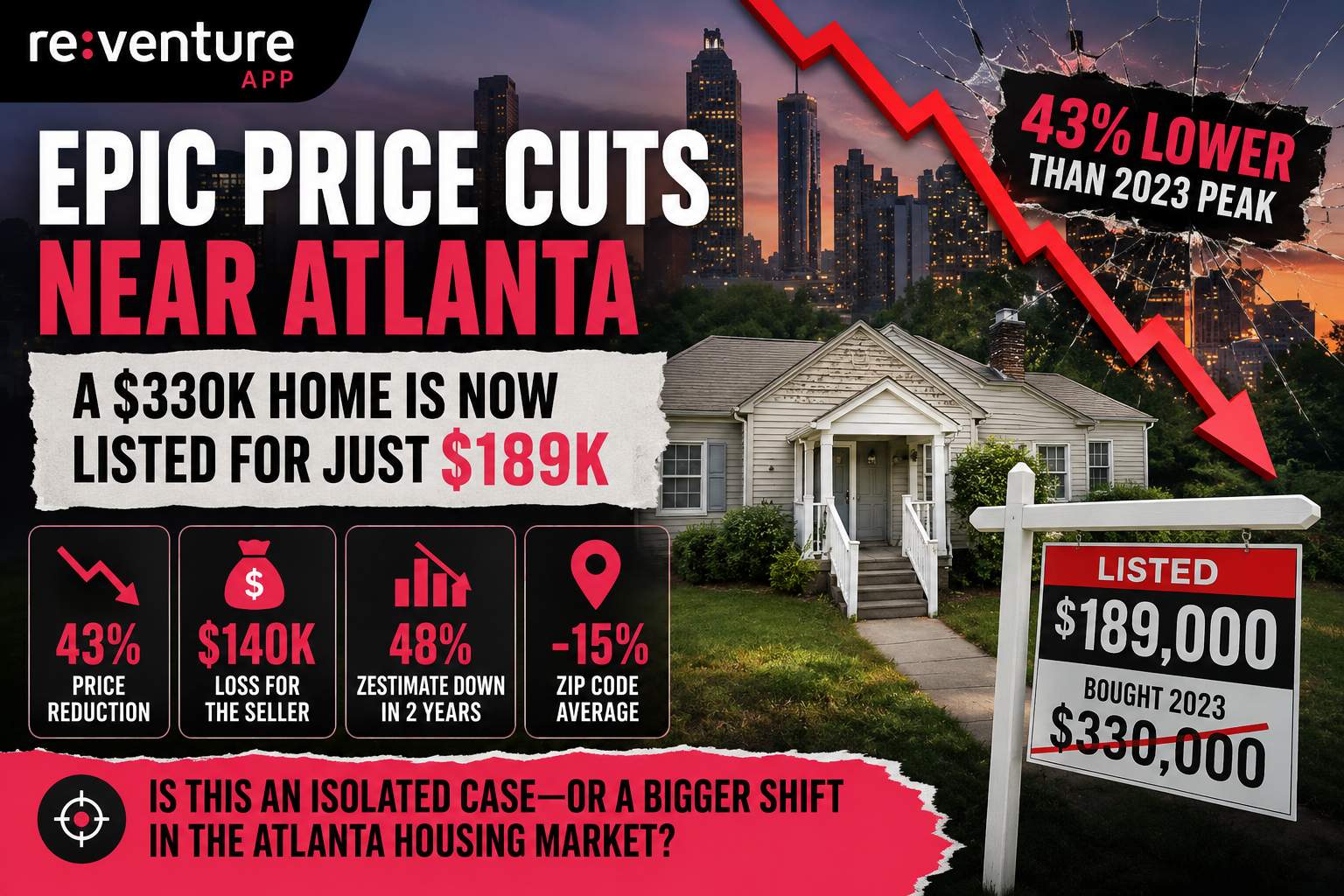
A home bought for $330,000 in 2023 is now listed for just $189,000 in 2026. Is this an isolated case, or the beginning of a much bigger shift in Atlanta’s Housing Market?
Just three years after purchasing near the peak of the pandemic housing boom, one Atlanta, GA-area homeowner has slashed their asking price by $140,000, a staggering 43% reduction from the original purchase price.
Even more surprising, Zillow’s Zestimate estimates the property’s value has declined 48% in just two years. While this example appears unusually severe, it highlights a growing trend unfolding in some of metro Atlanta’s most vulnerable neighborhoods.
The biggest price corrections are no longer happening equally everywhere. Instead, they’re concentrated in markets with rising inventory, weaker affordability, and increasing mortgage distress.
As these pressures build, buyers are beginning to find discounts that seemed impossible only a few years ago. These localized price declines are another sign that many of America’s most overheated markets are unwinding after the pandemic boom, a trend we examined in our analysis of the U.S. Housing Bubble 2025.
The listing below shows just how dramatically conditions have changed since the peak of the housing boom.

Why the Atlanta, GA, Housing Market Is Seeing Deep Price Cuts
During the pandemic, Atlanta, GA became one of America’s fastest-growing housing markets. Low mortgage rates, rapid population growth, investor demand, and limited inventory pushed home prices sharply higher between 2020 and 2022.
However, market conditions have changed dramatically. Mortgage rates remain elevated, affordability has deteriorated, and active inventory has increased across many neighborhoods.
Sellers who purchased near the market peak are finding that today’s buyers simply aren’t willing or able to pay yesterday’s prices.
Rising inventory has become one of the biggest drivers of housing corrections across the South. Nashville, for example, has experienced one of the nation’s largest inventory increases, creating similar downward pressure on prices.
The featured property illustrates this shift. Although it appears renovated and move-in ready, it has already gone under contract multiple times before returning to the market. That suggests the final sale price may ultimately end up even lower than the current asking price.
Interestingly, the home also exceeds the traditional 1% rule based on Zillow’s estimated monthly rent. For long-term investors, that could create attractive cash-flow opportunities—provided they buy at the right price.
The property’s estimated value history reveals just how quickly prices have adjusted over the last two years.

Not Every Atlanta Neighborhood Is Falling Equally
One dramatic listing doesn’t define an entire market. But local housing data shows that price corrections are becoming increasingly concentrated in specific parts of the Atlanta housing market.
According to Reventure App data, many ZIP codes across Atlanta’s south and east sides have already experienced double-digit price declines from their 2022 peaks. In contrast, many higher-income neighborhoods north of the city have remained relatively stable, with some continuing to record modest appreciation.
This regional divide reflects a broader trend unfolding across the country. Lower- and middle-income neighborhoods with greater investor ownership are seeing larger price corrections, while owner-occupied communities with stronger household incomes continue to hold up much better.
The ZIP code heat map highlights just how uneven Atlanta’s housing correction has become.

The map makes one thing clear: headlines claiming that “home prices are still rising” fail to capture what’s happening at the neighborhood level. Real estate remains an intensely local market, and some communities are correcting much faster than others.
Reventure’s Listing Analyzer Reveals What Buyers Should Actually Offer
Finding a home with a large price cut is one thing. Knowing whether it’s actually a good deal is another.
That’s becoming increasingly important in the Atlanta housing market, where some sellers are making aggressive price reductions while others continue listing homes well above their market value.
Rather than relying solely on the asking price, buyers should consider comparable sales, local forecasts, seller behavior, and how long the property has truly been on the market.
For this Atlanta-area home, Reventure’s Listing Analyzer estimates that a fair offer falls between $167,000 and $181,000, below the current list price of $189,000.
Instead of guessing what to offer, buyers can use local market data to negotiate from a stronger position.

Seller Desperation Is Becoming Easier to Identify
One of the most revealing data points isn’t the asking price—it’s how long the home has actually been trying to sell.
Although this listing has been removed and relisted several times, Reventure estimates that the property’s true days on market exceed 670. That’s a strong indication the seller has struggled to find a buyer despite making significant price reductions.
The Listing Analyzer also assigns the property a Seller Desperation Score of 96 out of 100, suggesting the homeowner may be highly motivated to negotiate. Combined with a 2027 ZIP code forecast of -5.03%, buyers may still have leverage even after the home’s 43% price cut.
These metrics help explain why simply looking at the list price doesn’t tell the whole story. A home can appear discounted while still being overpriced relative to where the local market is heading.
The Weakest Parts of Atlanta’s Housing Market Are Buckling First
Many national housing headlines continue to suggest that home prices remain resilient. While that may be true when looking at nationwide averages, those numbers often hide what’s happening at the neighborhood level.
The Atlanta Housing Market demonstrates why local data matters. Some ZIP codes are experiencing only modest changes, while others have already entered meaningful corrections.
Investor-heavy communities, particularly those with lower- and middle-income households, have been hit the hardest as affordability weakens and inventory continues to rise.
Atlanta isn’t the only market where distressed sellers are accepting steep losses. Similar patterns are emerging across the Florida Housing Market, where some homeowners are already taking six-figure losses after buying near the 2022 peak.
One of the biggest reasons for this divide is investor activity.
During the pandemic housing boom, institutional investors and Wall Street firms poured into many lower-priced Atlanta neighborhoods, driving up competition and home values.
Now, some of those same investors are reducing their exposure as inventory rises and price appreciation stalls. In this video, I explore why investors are selling homes in South Atlanta, GA, and why the trend could have major implications for the Atlanta housing market moving forward.
Meanwhile, higher-income neighborhoods with a larger share of owner-occupants have generally held their value better. This uneven performance explains why broad national headlines can be misleading for both buyers and sellers.
The lesson is clear: today’s housing market isn’t defined by one national trend. It’s increasingly becoming a collection of local markets moving in very different directions.
What This Means for Buyers
For buyers, the current environment presents opportunities that were almost impossible to find during the pandemic housing boom. Homes with significant price reductions, extended marketing times, and motivated sellers are becoming more common in selected Atlanta neighborhoods.
That doesn’t mean every discounted listing represents good value. Buyers should still analyze neighborhood trends, compare recent sales, review future market forecasts, and determine whether additional price declines are likely before making an offer.
Is Atlanta’s Housing Market Entering a New Phase?
Atlanta’s housing market is no longer moving in one direction. That’s because today’s housing market is increasingly local.
While Atlanta neighborhoods are experiencing meaningful corrections, other markets such as San Francisco are being supported by a completely different set of economic forces, showing why local data matters more than national averages.
A home purchased for $330,000 in 2023 and now listed for $189,000 is a powerful reminder that local housing markets can change quickly when affordability weakens, inventory rises, and mortgage distress increases.
For buyers, these conditions may create some of the best opportunities since the pandemic housing boom, but only if they understand where prices are headed rather than where they’ve been.
With Reventure’s Listing Analyzer, you can evaluate listings, compare local housing forecasts, estimate fair offer ranges, and negotiate with confidence using real market data instead of guesswork.

Frequently Asked Questions
1. Are home prices going down in Atlanta?
Yes. Parts of the Atlanta Housing Market, especially investor-heavy neighborhoods, are seeing noticeable price declines while some higher-income areas remain stable.
2. What is Reventure’s Listing Analyzer?
Reventure’s Listing Analyzer estimates a home’s fair offer range using local market data, comparable sales, forecasts, and seller behavior.
3. Is it a good time to buy a house in Georgia right now?
For many buyers, yes. More inventory and motivated sellers are creating better opportunities to negotiate.
4. Will homes become more affordable in Georgia in 2026?
Affordability could improve if prices continue to soften or mortgage rates decline, though trends will vary by market.
5. Why are Atlanta home prices falling in some neighborhoods?
Higher inventory, weaker demand, and investor sell-offs are putting downward pressure on prices in parts of the Atlanta Housing Market.