Florida Housing Crash just entered a New Phase ($105,000 discounts on short sales)

 July 21, 2026

A home that sold for $304,000 just three years ago is now listed for $195,000. The Florida Housing Market is producing six-figure losses as distressed sales and foreclosures reach levels not seen in years.
The data suggests the biggest opportunities for buyers may still be ahead. Across parts of the state, sellers are beginning to accept massive losses after purchasing near the 2022 housing peak. These discounts are another sign that many overheated housing markets are correcting after the pandemic boom, as we explained in our analysis of the U.S. Housing Bubble 2025.
In one striking example, a newly built townhouse in Southwest Florida that sold for $304,400 in 2023 is now listed for $195,000—a $109,400 loss, or nearly 36% below the original purchase price, in just three years.
This isn’t an isolated listing. Florida now ranks as the #1 state in America for foreclosures and distressed sales, creating a growing pool of motivated sellers. As more homeowners face financial pressure, buyers are beginning to see discounts that were almost impossible to find during the pandemic housing boom. For investors and homebuyers willing to look beyond the headlines, these distressed sales could mark the beginning of the best buying opportunities Florida has seen in years.
The listing below perfectly illustrates how quickly conditions have changed in parts of Southwest Florida.

Why Florida Housing Market Sellers Are Beginning Massive Liquidations
Only a few years ago, buyers routinely competed in bidding wars across Florida. Investors, retirees, and migration from higher-cost states pushed prices to record highs. Today, many of those same markets are moving in the opposite direction.
The Parrish townhouse is a good example. Rather than earning equity, the owner is attempting to exit the property at a six-figure loss. That type of price reduction would have been almost unthinkable during the housing boom, yet it is becoming increasingly common across several Florida markets.
Even more interesting is the property’s rental potential. Zillow currently estimates the home could rent for approximately $2,400 per month, meaning it comfortably exceeds the traditional 1% rule used by many real estate investors. While prices have declined sharply, rental income has remained comparatively resilient, creating better cash-flow opportunities for buyers willing to enter the market carefully.
The property’s value history highlights just how quickly prices have deteriorated.

The Florida Housing Market Downturn Extends Beyond One Property
One discounted listing does not automatically signal a market correction. However, local housing data shows this decline is affecting the broader Florida housing market, particularly along the state’s Gulf Coast.
Reventure App data indicates that home values across ZIP code 34219 (Parrish, Florida) have already declined approximately 16.6% from their 2022 peak. That means the townhouse’s steep discount isn’t occurring in isolation; it’s happening within a market that has already entered a meaningful correction.
The broader ZIP code tells the same story.

Unlike the brief slowdown seen in 2023, today’s correction appears to be driven by a combination of rising inventory, weaker affordability, higher mortgage rates, and increasing distressed sales. Builders are also facing their biggest slowdown since the Great Recession, adding even more supply to many Sun Belt markets, a trend we explored in our article on the Homebuilder Market downturn.
Those forces are creating conditions that resemble previous housing downturns, where motivated sellers begin competing aggressively for fewer qualified buyers.
For buyers, this creates an important question: When is the right time to make an offer?
While today’s prices are already substantially lower than the peak, forecasts suggest some Florida markets could continue softening into 2027. That means negotiating the right purchase price may be even more important than simply waiting for the lowest possible market value.
Reventure’s Listing Analyzer Shows What Buyers Should Actually Pay
Finding a discounted property is only the first step. The bigger challenge is determining whether today’s asking price is actually a good deal, or whether values could fall even further after you buy.
That’s becoming increasingly important in the Florida housing market, where many neighborhoods are still adjusting after the pandemic housing boom. Some sellers are cutting prices aggressively, while others continue listing homes above market value despite weakening demand.
To help buyers navigate these conditions, Reventure App recently launched its Listing Analyzer. The tool analyzes listings from Zillow, Redfin, and Realtor.com to estimate what a buyer should realistically offer based on local forecasts, comparable sales, and seller behavior.
Rather than guessing what to offer, buyers can compare the asking price against Reventure’s recommended offer range.

The Local Forecast Suggests More Price Declines Ahead
The Listing Analyzer doesn’t simply compare recent sales. It also incorporates Reventure’s one-year housing forecast.
For this Parrish property, the surrounding ZIP code is projected to decline by another 7.14% over the next year. That’s why Reventure’s recommended offer range falls below the current list price.
Another important data point is how this individual property compares with the surrounding neighborhood.
Since its purchase in July 2023:
- The home’s value has fallen 35.9%
- The surrounding ZIP code has declined 14.0%
- The property has significantly underperformed the broader market
That tells buyers something important. The seller is discounting the home much faster than the overall market has declined, creating a stronger negotiating position.
The ZIP-level data shows exactly how this property’s performance compares with the surrounding market.

The Biggest Discounts Are Concentrated in Specific Parts of Florida
Not every housing market in Florida is experiencing the same correction. Affluent suburban communities in other high-growth states are also seeing home values retreat from their pandemic highs, including Collin County, Texas, where prices have fallen roughly 10% below their peak.
According to Reventure data, the largest price declines remain concentrated along Florida’s Gulf Coast and Southwest Florida, including markets around Tampa, Sarasota, Cape Coral, Fort Myers, Punta Gorda, and North Port. Several parts of Central Florida are also recording year-over-year price declines.
Meanwhile, some areas along Florida’s East Coast have held up better, although appreciation has slowed significantly compared to the pandemic boom.
The growing number of foreclosures and distressed sales is adding additional downward pressure in the hardest-hit markets. Sellers facing financial distress often prioritize speed over maximizing price, creating opportunities for buyers willing to negotiate.
But why are foreclosures and distressed sales increasing so rapidly in Florida?
The answer goes beyond home prices. Rising insurance costs, higher mortgage payments, and affordability pressures are making it difficult for some homeowners to keep up with their monthly payments. In the video below, I explore why more Floridians are falling behind on their mortgages, and what it means for the future of the Florida housing market.
While individual listings like the Parrish townhouse illustrate how steep discounts are becoming, they don’t tell the whole story. To understand where the Florida housing market is experiencing the most pressure, it’s important to look at statewide trends.
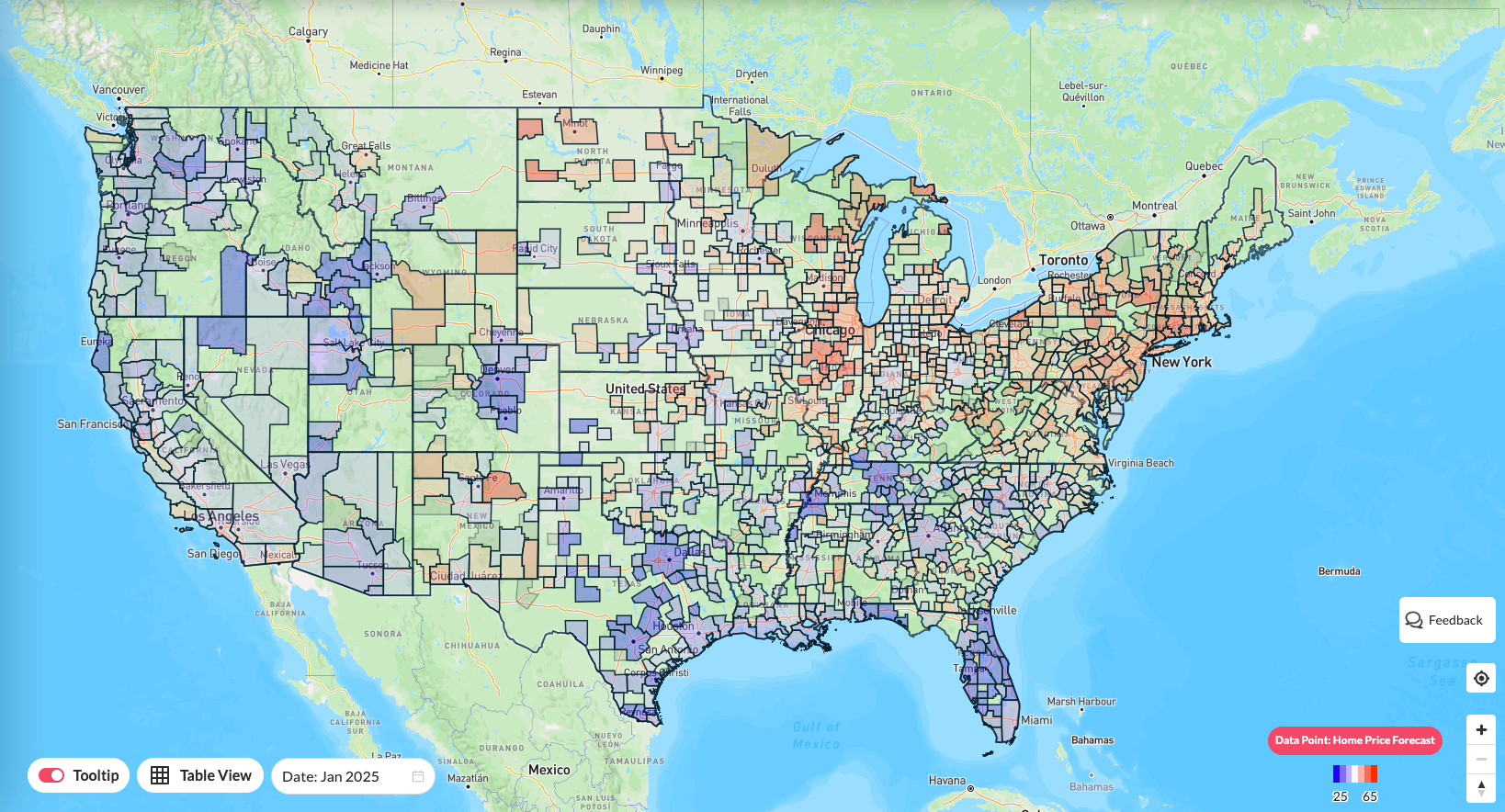
Reventure’s heat map reveals that price declines are no longer limited to a handful of neighborhoods; they’re spreading across large portions of Florida, with the sharpest corrections concentrated along the Gulf Coast, in Southwest Florida, and in parts of Central Florida. The map below highlights where home values are falling the fastest and where buyers may find the greatest negotiating opportunities.

The Florida Housing Market Is Becoming a Buyer’s Market
The Florida housing market has clearly shifted from the seller-dominated conditions of 2021 and 2022. Rising inventory, higher mortgage rates, weaker demand, and an increase in distressed sales are giving buyers leverage they haven’t had in years.
That doesn’t mean every home is a bargain. Buyers still need to evaluate whether a property’s asking price reflects where the local market is heading, not where it has been.
Tools like Reventure’s Listing Analyzer can help remove much of that uncertainty by combining market forecasts, comparable sales, seller behavior, and local pricing trends into one recommendation. In the Parrish example, the recommended offer range of $175,000 to $189,000 could help buyers avoid overpaying in a market that is still forecast to decline.
Before submitting an offer, it’s worth analyzing how your local market is performing and what a home may actually be worth one year from now.

Are Florida’s Biggest Buying Opportunities Still Ahead?
The Florida housing market is no longer defined by bidding wars and rapidly rising prices. Instead, motivated sellers are accepting six-figure losses, distressed sales are increasing, and buyers finally have negotiating power again.
For those willing to be patient and data-driven, this shift could create some of the best buying opportunities since the last housing downturn. The key isn’t simply finding a discounted home; it’s knowing how much to offer based on where the market is likely to go next.
With the Reventure App, you can analyze listings, view local housing forecasts, compare market trends, and generate data-backed offer ranges to help you negotiate with confidence in today’s changing housing market.
Frequently Asked Questions
1. Why is the Florida Housing Market declining?
The Florida Housing Market is weakening due to higher mortgage rates, rising inventory, slower buyer demand, and an increase in foreclosures and distressed sales.
2. Is now a good time to buy a home in Florida?
It can be. Buyers have more negotiating power than they did during the housing boom, and many sellers are accepting significant price reductions.
3. Which parts of the Florida Housing Market are seeing the biggest price drops?
The largest declines are occurring along Florida’s Gulf Coast, Southwest Florida, and parts of Central Florida, where inventory has increased the most.
4. Will Florida home prices continue to fall?
Some Florida markets are expected to see additional price declines through 2027, although the outlook varies by city and ZIP code.
5. How can buyers find the best deals in the Florida Housing Market?
Using data-driven tools like Reventure’s Listing Analyzer can help buyers identify motivated sellers, compare local market trends, and estimate a fair offer before making a purchase.






3 Responses