America Birth Rate Just Hit a Record Low (Here is what it means for Housing)

 July 20, 2026


The Birth/Death Ratio Is Becoming a Critical Housing Metric
One of the best ways to measure future housing demand is the Birth/Death Ratio. This metric compares the number of births to the number of deaths in a city, metro, or state. The higher the ratio, the stronger the foundation for long-term population growth and housing demand.
A Birth/Death Ratio above 1.0 means births still outnumber deaths. Once that ratio falls below 1.0, an area enters organic population decline, where deaths exceed births. That shift may not impact home prices immediately, but it weakens the long-term demand outlook.
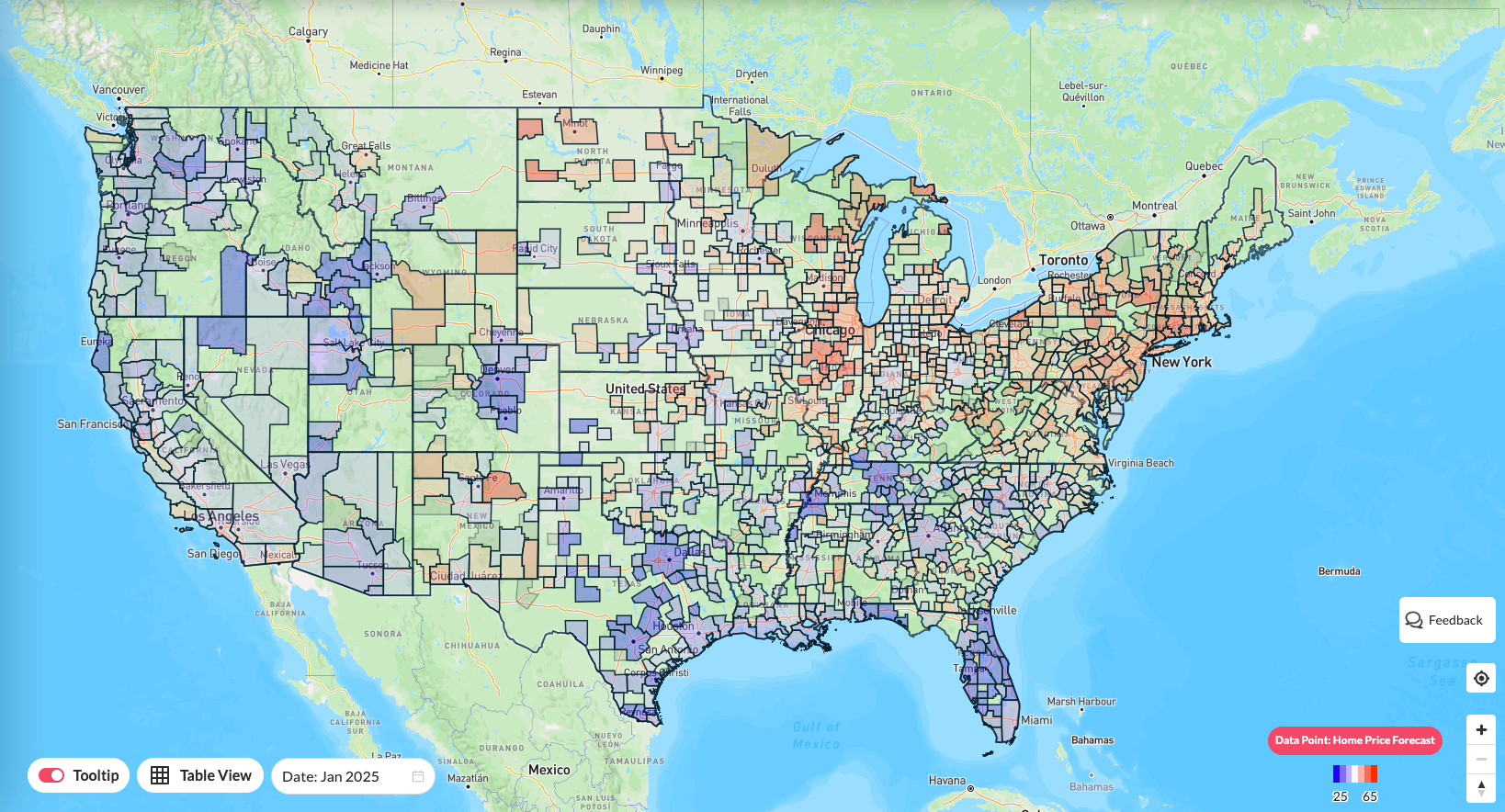
The Birth/Death Ratio provides a simple way to identify which housing markets have stronger long-term demographic foundations. The map below shows how dramatically this metric varies across the country.

Last year, 18 states recorded Birth/Death Ratios below 1.0. West Virginia, Maine, and Vermont stand out, with roughly 30% more deaths than births. Other states already experiencing organic population decline include Oregon, Pennsylvania, Alabama, Florida, and Ohio.
These markets could face slower housing demand over the next several decades. Fewer young families will be available to replace older homeowners, while more homes gradually return to the market through estate sales. That combination points to higher inventory and slower price appreciation over time.
States Best Positioned for Long-Term Growth
Not every housing market faces the same demographic challenge. Some states continue to produce strong natural population growth and remain well positioned for long-term housing demand.
Utah leads the nation with a Birth/Death Ratio of 2.13. That means there are more than two births for every death. Texas, Alaska, Washington, D.C., Colorado, Idaho, and California also rank among the strongest states.
Metro-level data tells a similar story. Provo, Utah, posts an outstanding Birth/Death Ratio of 3.83, making it one of the healthiest demographic markets in America. When combined with positive domestic migration, these areas have a stronger foundation for sustainable housing demand.
Even high-performing markets deserve closer examination. Rapid-growth markets can still weaken when housing supply outpaces demand, as we’ve seen in the Collin County Housing Market. Austin, for example, still has an impressive Birth/Death Ratio of 2.21. However, that figure has declined nearly 40% from where it stood two decades ago, showing that demographic growth is slowing almost everywhere.
Even some of America’s fastest-growing cities are experiencing slower demographic growth than they did twenty years ago.

The demographic story isn’t negative everywhere. Several states continue to produce healthy natural population growth, giving them a stronger long-term foundation for housing demand.

Other Countries Show Why Demographics Matter
The impact of declining birth rates isn’t just a theoretical risk. Several major economies have already experienced organic population decline, offering a glimpse of how demographics can reshape housing demand over time. While the U.S. is different in many ways, these examples serve as valuable case studies for what can happen when fewer births and more deaths become a long-term trend.
Japan Shows What Long-Term Population Decline Can Do
Japan provides the clearest example of what can happen when demographic decline becomes persistent. Home prices never fully recovered after population growth reversed, highlighting the long-term impact demographics can have on housing demand.

Japan’s working-age population began shrinking in the 1990s as births declined and the population aged. Over the following two decades, nominal home prices dropped by roughly 53%, and even today remain well below their early-1990s peak.
While other economic factors contributed to the downturn, demographics became a major structural headwind for housing demand.
China and Canada Offer More Recent Warnings
More recent examples reinforce the same message. China and Canada have both entered periods of demographic slowdown, and each has experienced meaningful weakness in its housing market.

China is now in its fourth year of a housing downturn. At the same time, the country has entered organic population decline, with deaths outnumbering births. While demographics are not the only cause of falling home prices, they are contributing to weaker long-term housing demand.
Canada tells a similar story. Home prices have corrected sharply after a historic housing boom, while the country recently recorded its first period of population decline and now faces more deaths than births.
Demographics alone did not cause the correction, but they have added another long-term challenge for housing demand.

The United States is unlikely to follow the exact path of Japan, China, or Canada. Higher immigration and a more diverse population provide important advantages.
Even so, these countries demonstrate that demographic trends eventually influence housing markets. The question is not whether demographics matter—but which U.S. markets will be best prepared for the changes ahead.
The Biggest Housing Shift Has Already Begun
The decline in Birth Rates is a slow-moving trend, but it could become one of the biggest forces shaping the U.S. housing market over the next two decades. Markets with stronger demographics are likely to outperform, while areas with more deaths than births could see weaker demand and higher inventory levels.
Before buying or investing, pay close attention to the Birth/Death Ratio. Higher Birth/Death Ratios generally point to stronger long-term housing demand.
Want to see how your local market is positioned? Reventure App lets you explore Birth/Death Ratios, migration trends, home price forecasts, and dozens of other housing indicators for every state, county, ZIP code, and metro in America.

Frequently Asked Questions
1. Is the U.S. birth rate below the replacement level?
Yes. The U.S. fertility rate is below the replacement level of about 2.1 births per woman.
2. Why is a declining birth rate a problem?
It can reduce the number of future workers, taxpayers, and homebuyers, as well as overall housing demand.
3. Is the birth rate declining worldwide?
Yes. Birth rates are falling across many developed countries, including the U.S., Japan, China, and much of Europe.
4. How could lower birth rates affect the U.S. housing market?
They could mean fewer future buyers, slower household formation, and more inventory in aging markets.
5. Is a declining birth rate always a bad thing?
Not always, but a long-term decline can weaken economic growth and increase pressure on aging populations.