Is the U.S. Real Estate Market in a Recession? Home Sales Near Historic Lows

 August 19, 2026
Home sales in America just recorded their fifth-lowest July reading on record.
Existing home sales ran at an annualized pace of only 4.06 million in July 2026, compared with 5.43 million in July 2019. That means Americans are buying homes at a rate roughly 25% below pre-pandemic norms.
Yet prices aren’t collapsing. The median sale price reached a record $434,000, while sales of homes priced above $1 million increased 14% year-over-year.
That creates one of the strangest contradictions in the U.S. Real Estate Market: transaction activity looks recessionary, but headline home prices remain near record highs.
Sky-high prices combined with mortgage rates still in the 6% range have pushed millions of ordinary buyers to the sidelines. In effect, homebuyers are going on strike.
But underneath the national numbers, the market is beginning to split. Luxury buyers remain active, while sellers in parts of the South and West are increasingly cutting prices.
So, is the U.S. housing market actually in a recession? The sales data suggests the downturn is much deeper than headline home prices make it appear.
U.S. Real Estate Market Sales Are 25% Below Normal
It’s difficult to overstate how weak housing demand has become.
The annualized pace of existing home sales reached 4.06 million in July 2026, compared with approximately 5.43 million during the same month in 2019.
That’s a decline of roughly 25% from pre-pandemic levels.
The historical sales data puts that decline into perspective. July’s 4.06 million annualized pace isn’t simply weak compared with the pandemic boom; it ranks among the worst July readings of the last three decades and sits far below the roughly 5.3 million pre-pandemic benchmark.

And July wasn’t simply a weak month. It ranked as the fifth-lowest July sales reading on record.
Normally, millions of Americans move every year because of new jobs, marriages, children, retirement, and other life changes. But today’s combination of elevated home prices and mortgage rates has effectively frozen much of that activity.
The result is a housing market where both buyers and existing homeowners have powerful reasons not to move.
Buyers can’t afford today’s payments. Existing homeowners often don’t want to give up the low mortgage rates they locked in several years ago.
That stalemate has pushed transaction volumes toward historic lows.
The U.S. Real Estate Market Looks Even Worse When Adjusted for Population
Raw sales numbers don’t tell the entire story.
America has significantly more homeowners today than it did during previous housing downturns. When existing sales are measured relative to the number of owner-occupied homes, the current contraction looks even more unusual.
Only about 4.5% of U.S. owner-occupied homes have been transacted annually during the last four years.
Looking at nearly five decades of data shows just how unusual that level of turnover is. The current four-year period is running below the roughly 5% turnover rate recorded during the 2008-2012 housing downturn and is approaching levels last seen during the severe early-1980s housing recession.

During the 2008-2012 housing downturn, that figure was closer to 5%.
The severe 1981-82 downturn pushed turnover closer to 4%, but that contraction lasted roughly two years.
Today’s slowdown has persisted for around four.
That’s why the current environment can reasonably be described as a silent housing recession—or even a transaction depression.
It doesn’t look like 2008 because national home prices haven’t crashed. But measured by Americans actually buying and selling homes, the market is extraordinarily weak.
Why Homebuyers Are Going on Strike
The central problem is affordability.
Home prices surged during the pandemic and remained elevated even after mortgage rates increased dramatically.
A $400,000 house financed at a 3% mortgage rate produces a very different monthly payment from the same house financed at 6% or 7%.
Buyers today are dealing with both expensive homes and expensive financing.
The affordability problem has been building for years. Reventure data previously showed that U.S. home prices had become even more stretched than during the 2006 housing bubble, helping explain why so many buyers are now sitting on the sidelines.
For many households, the numbers simply don’t work. That affordability squeeze is measurable. Our analysis of why Americans are not buying houses found that the typical mortgage payment now consumes roughly 38% of household income, leaving many would-be buyers unable to make today’s prices work.
Instead of stretching their budgets to purchase, prospective buyers are staying in rentals, living with family, or remaining in their existing homes longer.
But one group hasn’t disappeared.
Luxury buyers.
Million Dollar Home Sales Surge 14%
Sales of homes priced at $1 million or more increased 14% year-over-year.
That’s an extraordinary contrast with the broader market.
Higher-income households are generally less sensitive to mortgage rates. Some purchase with substantial down payments or cash, while others have enough income and assets to absorb higher financing costs.
That means affluent buyers can continue transacting even while traditional buyers retreat.
And that may be distorting national price statistics.
The median sale price reached a record $434,000 in July, despite sales volumes remaining near historic lows.
If million-dollar homes represent a growing share of all transactions, median and average prices can rise even without widespread home price appreciation.
In other words, the record median price doesn’t necessarily mean the typical housing market is getting stronger.
It may partly reflect who is still able to buy.
Why U.S. Real Estate Market Prices Could Be Misleading
This creates an important risk when interpreting national housing statistics.
Imagine fewer entry-level and middle-income homes selling while luxury transactions increase. Even if individual property values aren’t rising significantly, the median transaction price can increase because expensive homes represent a larger share of sales.
If ordinary buyers eventually return and transaction volumes normalize, median and average sale prices could fall simply because the sales mix changes.
Meanwhile, some local markets are already experiencing genuine price corrections.
And that’s where opportunities are beginning to emerge.
Housing Market Weakness Is Creating Buyer Opportunities
Historically low demand isn’t necessarily bad news for everyone.
For buyers who have sufficient income, financing and a long-term reason to purchase, weak demand can create negotiating leverage.
That’s especially true in parts of the South and West where housing inventory has recovered.
Sellers in some markets are now reducing prices by $50,000 to $100,000 below what they paid near the pandemic peak.
Those aren’t cosmetic price cuts.
They’re signs that genuine affordability is beginning to return in certain pockets of the country.
Bellevue, Washington, provides an interesting example.
A high-end waterfront townhome recently reached an asking price of approximately $760,000.
This Bellevue listing shows what that adjustment can look like at the property level. Despite being located on the water in one of the Seattle metro’s more expensive markets, the home’s estimated value has fallen sharply from its 2022 peak and is moving back toward its pre-pandemic pricing.

That’s still expensive. But the property is nearly 25% below its peak valuation and has moved surprisingly close to its 2019 sale price.
The national market may still look expensive, but individual listings can tell a very different story.
Below-List Offers Are Becoming More Realistic
Reventure’s Listing Analyzer suggests the Bellevue property could potentially support an offer between approximately $689,000 and $747,000, depending on comparable sales, local conditions, and seller motivation.
The asking price, in other words, is only the starting point. Reventure’s analysis of comparable properties, historical appreciation, its one-year market forecast, and seller conditions produces a range of potential offers below the $760,000 list price.

Two metrics are especially useful in situations like this.
The first is True Days on Market.
The Bellevue property has effectively been available for around 90 days. A listing that has sat for that long has already received substantial feedback from buyers, potentially making the seller more receptive to negotiation.
The second is how much the property’s price has changed relative to the surrounding market.
In this example, the seller has increased the property’s price only around 5% since its 2019 sale, while the broader market has appreciated approximately 62%.
That discrepancy can be a positive signal for buyers searching for value.
Could Home Sales Fall Below 4 Million?
The housing slowdown may not be over.
Several forward-looking demand indicators remain weak heading into the second half of 2026.
Mortgage purchase applications are trending below last year’s already depressed levels, while online searches for homes are also slowing.
Because these activities occur before transactions close, they can provide clues about future sales volumes.
Reventure expects housing demand to remain subdued through the second half of 2026.
If these indicators continue deteriorating, annualized existing home sales could eventually fall below 4 million.
That would create additional pressure on sellers in markets where inventory is already elevated.
Is the U.S. Real Estate Market Really in a Recession?
The answer depends on what you’re measuring.
National home prices remain elevated, and luxury transactions are performing surprisingly well.
But sales volumes tell a completely different story.
Transactions are approximately 25% below pre-pandemic norms, homeowner turnover has remained near historically depressed levels for four years, and affordability continues to keep millions of prospective buyers sidelined.
Meanwhile, local corrections are creating opportunities that national statistics can easily hide.
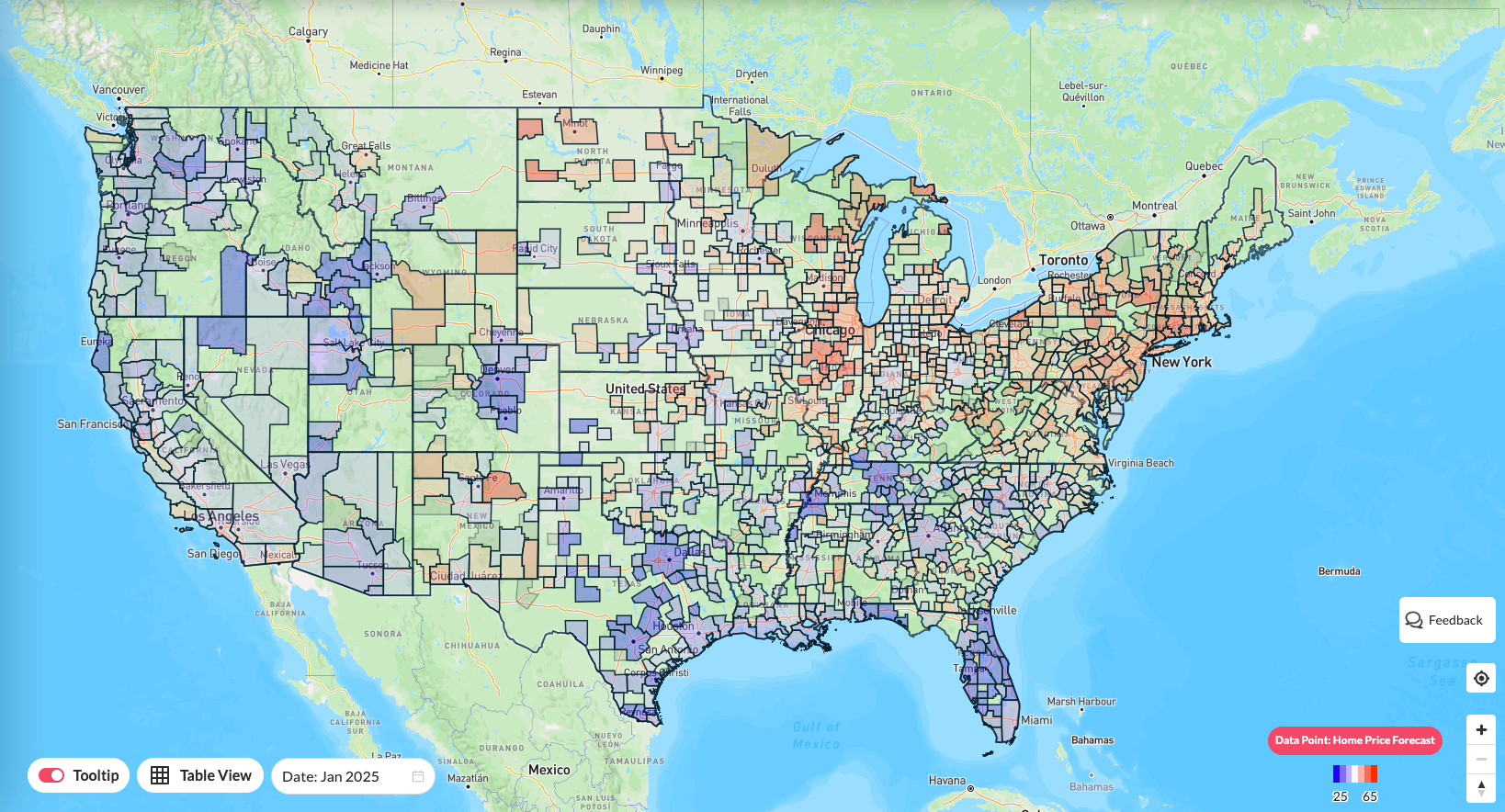
That’s why buyers should increasingly focus on ZIP code and property-level data rather than national averages.
Reventure lets buyers track local housing conditions and use the Listing Analyzer to examine True Days on Market, comparable properties, market trends, and potential offer ranges before negotiating.
In a market this fragmented, buyers increasingly need to know what is happening with the specific property and ZIP code they are considering—not just what national home prices are doing. Reventure’s Listing Analyzer is designed to turn that local data into an actionable offer range in seconds.

The U.S. Real Estate Market may not look like a traditional housing crash.
But when home sales are near historic lows, and buyers have effectively stopped participating, the more important question is whether the housing recession has already been here for years.







2 Responses