Florida Home Price Cuts Are Getting Bigger. Some Sellers Are Down 40%

 August 27, 2026

Florida homebuyers still aren’t coming back in meaningful numbers—and sellers are finally being forced to respond.
Only 32,100 homes sold across Florida in July 2026, tying the third-lowest July sales count of the last 13 years. Transactions remain roughly 30% below the pandemic peak, 20% below 2019 levels, and 11% below the long-term July average.
Meanwhile, affordability remains brutal. The typical mortgage payment, including taxes and insurance, consumes roughly 45% of local household income.
Now that prolonged demand weakness is showing up somewhere, buyers have been waiting to see it: asking prices.
Florida Home Price Cuts are becoming more aggressive, with distressed properties in some markets selling or listing 20% to 40% below peak valuations.
Some analysts are pointing to slightly higher sales and declining inventory as evidence that Florida is finally recovering. But underneath those headline numbers, migration has collapsed, employment growth is weakening, unemployment is rising, and Florida now leads the country in foreclosure activity.
So is Florida actually recovering—or are sellers simply adjusting to a housing recession that has now entered its fourth year?
Florida Home Price Cuts Are Growing as Buyers Stay Away
Florida’s housing market has been stuck in a demand downturn for years.
July’s 32,100 sales represented a roughly 7% year-over-year improvement, which might initially sound encouraging.
But context matters.
Sales remain 30% below the pandemic peak and 11% below the long-term July average. Compared with 2019, activity is still approximately 20% lower. The longer-term sales trend makes the weakness difficult to dismiss as a temporary slowdown. Florida went from roughly 46,100 July sales at the pandemic peak to just 32,100 in July 2026, leaving activity well below both pre-pandemic levels and the historical July average.

In other words, Florida may be bouncing modestly from extremely depressed levels, but buyers haven’t returned in sufficient numbers to create a genuine breakout.
Affordability is one major reason.
Reventure data shows the typical mortgage payment as a percentage of income remains around 45% in Florida, including property taxes and homeowners insurance.
That means a typical household would need to devote nearly half its gross income to housing costs. And while affordability has improved somewhat from the extreme levels reached in 2022 and 2023, the historical comparison shows how abnormal today’s burden remains. Florida buyers are still facing ownership costs far above the levels that prevailed through much of the 2010s.

For many prospective buyers, the numbers simply don’t work.
And the outside demand that previously helped Florida overcome its affordability problems has also weakened dramatically.
Florida Migration Has Collapsed 93%
Domestic migration was one of the most powerful forces behind Florida’s pandemic housing boom.
In 2022, the state gained approximately 311,000 domestic migrants.
By 2025, that number had collapsed to roughly 22,000.
That’s a staggering 93% decline. The historical trend makes that collapse even more striking. Florida’s migration boom wasn’t simply strong in 2022—it was extraordinary by historical standards. But the subsequent reversal has been nearly as dramatic, taking one of the housing market’s biggest sources of incremental demand with it.

Reventure’s historical migration data shows 2025 was Florida’s fourth-worst domestic migration performance in approximately 35 years.
That matters because Florida historically depends heavily on people relocating from other states to support population growth, housing demand, and home prices.
During the pandemic, hundreds of thousands of incoming residents helped absorb housing inventory even as prices soared.
Today, that demand engine is dramatically weaker.
Based on the pattern following the 2007-2011 downturn, migration could remain subdued for another year or two—particularly while buying and renting in Florida remain expensive.
Why Florida Home Price Cuts Could Keep Spreading
Inventory has actually declined recently, which some observers view as another sign of recovery.
Florida had approximately 175,000 active listings in July 2025. By July 2026, inventory had fallen to around 150,000, a 14% year-over-year decline. On the surface, that decline could look bullish. But falling inventory doesn’t automatically mean buyers are suddenly absorbing homes. The important question is whether listings are disappearing because properties are selling—or because discouraged sellers are simply taking them off the market.

But what’s causing the decline is important.
A significant portion appears to be coming from sellers delisting properties or fewer owners putting homes on the market, rather than a massive surge of buyers absorbing inventory.
There has been some improvement in demand, but not enough to explain the entire inventory decline.
That’s an important distinction.
A healthy housing recovery would typically involve stronger buyer demand, generating more transactions and absorbing available homes.
Instead, Florida appears to be experiencing some stabilization because frustrated sellers are withdrawing listings.
For buyers, that means the underlying affordability problem hasn’t disappeared.
Florida Economy Is Becoming Another Housing Risk
Housing isn’t the only warning sign.
Florida’s labor market is also losing momentum.
Bureau of Labor Statistics data shows payroll employment growing only about 0.4% year-over-year in mid-2026.
That’s considerably below the 2% to 3% employment growth Florida often experiences during stronger economic expansions.
Unemployment is moving in the opposite direction.
Florida’s unemployment rate has climbed from approximately 2.8% in 2023 to 4.7% in 2026.
The longer-term unemployment trend shows just how quickly Florida’s labor market has changed direction. While today’s rate remains far below recessionary extremes such as 2009 or 2020, the rise from the 2023 low represents a meaningful deterioration in the economic backdrop supporting housing demand.

A 4.7% unemployment rate isn’t a crisis by itself.
But the direction matters.
Rising unemployment means more households experience income uncertainty at precisely the moment when mortgage payments, insurance and property taxes remain expensive.
That combination can weaken housing demand further—and increase financial stress among recent buyers.
Foreclosure Distress Is Creating Bigger Discounts
Florida now ranks #1 nationally for foreclosure activity, according to ATTOM data cited in the thread.
Several forces are colliding.
Some homeowners purchased near peak valuations in 2022 and 2023. Home values have since declined in many Florida markets, while ownership costs remain elevated and the economy is weakening.
For owners who need to sell, there may no longer be enough equity to exit normally.
That’s where short sales and other distressed listings begin appearing.
One recent example involves a Florida home purchased for approximately $334,000 in 2023.
Three years later, the property was listed as a short sale at approximately a 16% loss.

This listing shows what mortgage distress can look like at the property level. Rather than waiting for the broader Florida market to decline by the same amount, a motivated seller is already accepting a significantly lower valuation in an attempt to exit the property.
Other distressed properties are showing substantially larger discounts. And this isn’t necessarily the extreme case. Florida Home Price Cuts are becoming considerably larger on certain distressed listings, with some properties now appearing 20%, 30%, or even 40% below their previous peak valuations.
Across parts of Florida, we’re increasingly finding homes 20%, 30%, and sometimes 40% below their peak valuations.
Those individual listings don’t mean every Florida home has declined 40%.
But they demonstrate something important: motivated sellers can price far ahead of the broader market correction.
Bigger Florida Home Price Cuts Could Create Buyer Opportunities
This is where Florida’s weak demand becomes potentially positive for patient buyers.
During 2021 and early 2022, buyers frequently had little negotiating leverage. Inventory was scarce, migration was booming, and bidding wars pushed prices higher.
That environment has reversed in many communities.
Today’s buyer can encounter sellers who purchased near the peak, have been sitting on the market, and now need to exit.
A property selling 20% to 40% below peak value could potentially offer much better fundamentals than simply buying a house that has received a small 5% price reduction.
But buyers still need to be careful.
A large discount doesn’t automatically make a home cheap. Some Florida markets became extraordinarily overvalued during the pandemic, meaning a 20% decline could simply remove part of an earlier price surge.
Local inventory, comparable sales, days on market, economic conditions and forward price forecasts all matter.
Could Property Tax Relief Bring Buyers Back?
There is one major wild card heading into 2027: Amendment 3.
Florida voters are scheduled to consider a property tax relief proposal on November 3, 2026, that could substantially increase the Homestead Exemption for qualifying non-school property taxes.
Under the proposal described in the thread, the exemption could eventually reach $250,000 by 2028.
For owners of lower-priced homes, this could significantly reduce non-school property tax costs.
If passed, the measure could provide some affordability relief and potentially encourage more Florida residents to purchase homes.
But tax relief alone probably wouldn’t recreate the pandemic boom.
Florida would still face weak migration, expensive insurance, elevated housing costs, and a slowing labor market.
At most, it could provide a useful boost to demand while the broader market continues adjusting.
Florida Sellers Are Finally Adjusting to the New Market
Florida’s housing downturn is entering its fourth year, and the hoped-for demand breakout still hasn’t arrived.
Sales remain 30% below the pandemic peak, affordability is severely constrained, domestic migration has fallen 93% from 2022 levels, and unemployment has risen substantially from its 2023 low.
Yet something is finally changing.
Sellers are adjusting.
Some are withdrawing properties rather than accepting lower prices. Others—particularly distressed owners—are cutting aggressively enough to reach valuations 20% to 40% below previous peaks.
That’s where buyers should pay attention.
Rather than trying to predict the exact statewide bottom, buyers can search for individual properties where sellers have already moved well ahead of the broader correction.
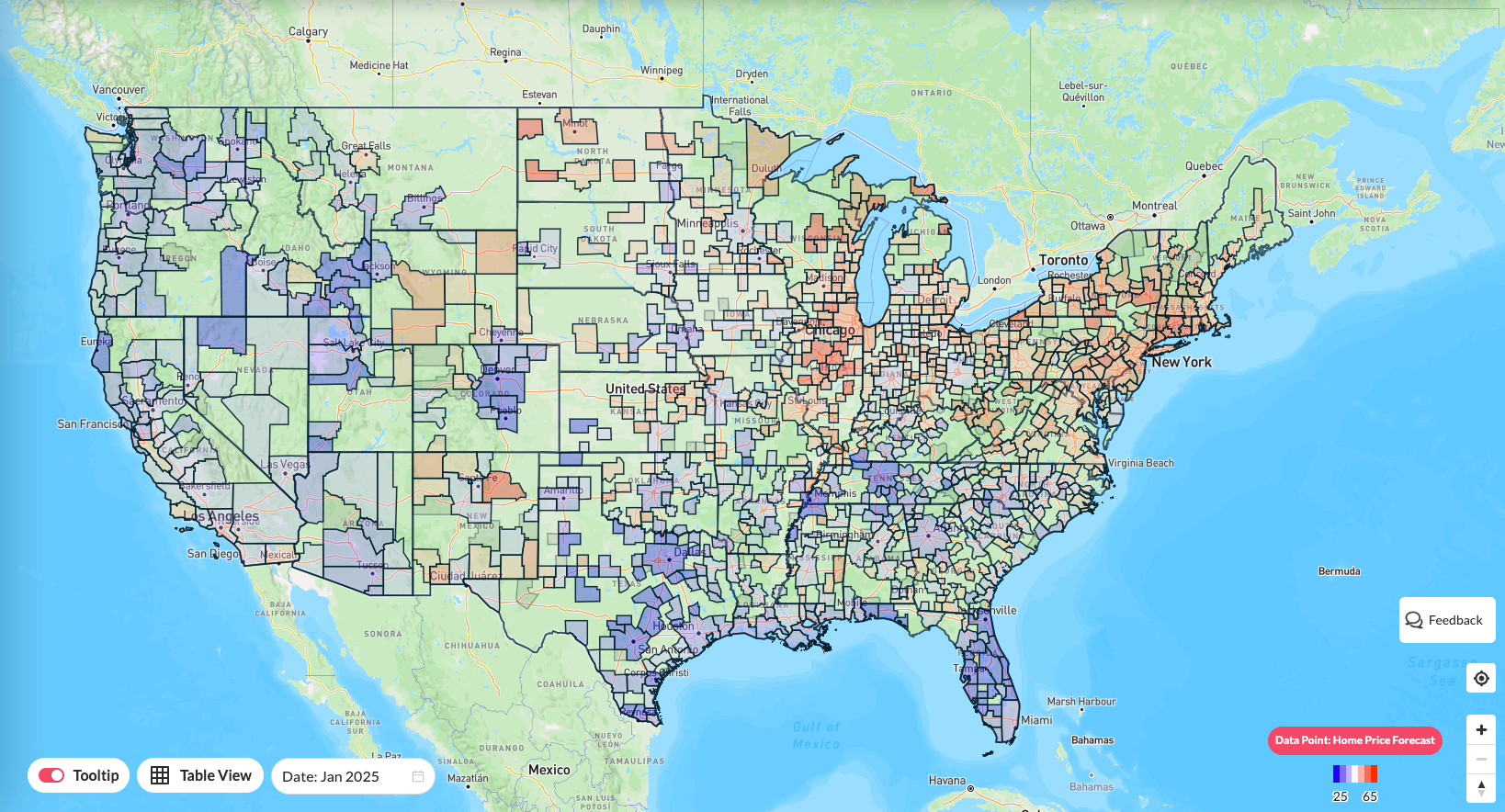
Reventure allows buyers to track housing conditions and 2027 price forecasts at the ZIP-code level, while the Reventure Listing Analyzer can help evaluate individual listings and potential offer ranges.
Florida Home Price Cuts may be painful for sellers who purchased near the top.
But after four years of historically weak demand, those discounts could finally be creating the negotiating opportunities Florida buyers have been waiting for.






3 Responses