Elon Musk is pouring billions of dollars into artificial intelligence infrastructure in Memphis. But so far, the city’s housing and job markets are moving in the opposite direction. Memphis is home to xAI’s massive Colossus supercomputer, a project that has rapidly expanded since breaking ground in 2024.
Yet the surrounding housing market is now dealing with an avalanche of supply. Memphis metro inventory surpassed 5,400 listings in June 2026—65% above the long-term norm and more than four times the 2022 low.
The scale of that inventory buildup becomes much clearer when compared with previous years. After bottoming near 1,200 listings in 2021, Memphis housing supply has climbed rapidly back above its historical norm.

And the inventory problem isn’t confined to a handful of neighborhoods. Excess supply is appearing across much of the Memphis metropolitan area.
The labor market is struggling, too. Since construction on Colossus began in May 2024, Memphis metro payroll employment has declined by roughly 12,000 jobs, or 1.8%, even as U.S. employment increased.
That contrast raises a bigger question for housing markets across America: Can billions of dollars in AI data center investment actually create enough local jobs and housing demand to transform a city?
Memphis suggests the answer may be more complicated than investors expect.
Memphis Housing Supply Is 65% Above Normal
The Memphis metropolitan area stretches across 10 counties in Tennessee, Mississippi, and Arkansas. Housing inventory has increased across much of the region, but the most dramatic shift is occurring in Shelby County, home to Memphis itself.
In a typical June, Shelby County has around 2,000 homes listed for sale. This June, buyers had more than 3,700 listings to choose from.
That’s roughly 82% above the long-term norm.
The county-level data shows just how widespread the imbalance has become. Shelby County is at the center of the surge, but several surrounding counties are also carrying substantially more inventory than their historical norms.

Despite this widespread increase in supply, Memphis home values have held up surprisingly well so far. But other indicators suggest sellers are beginning to feel the pressure.
Across the broader Memphis metro, inventory has climbed beyond 5,400 homes, about 65% above normal for June. Supply has also more than quadrupled from its 2022 low.
So far, home prices haven’t collapsed under the additional inventory.
Memphis metro home values are approximately flat year-over-year, while Shelby County values are down around 1.4%.
But more recent indicators suggest the market is weakening.
More Memphis Sellers Are Cutting Prices
Homes are taking longer to sell.
Days on market recently reached its highest level in roughly a decade, while about 31.4% of listings have experienced a price cut.
One of the clearest signs of that slowdown is how long listings are sitting. Memphis homes now take considerably longer to sell than they did during the pandemic housing boom.

That increase matters because rising days on market often gives buyers more negotiating power. As listings accumulate without selling, more homeowners may eventually have to cut prices to compete.
Those indicators matter because inventory often changes before prices do.
When listings accumulate and homes take longer to sell, sellers face increasing competition. Some eventually reduce their asking prices to attract buyers, particularly if demand remains weak.
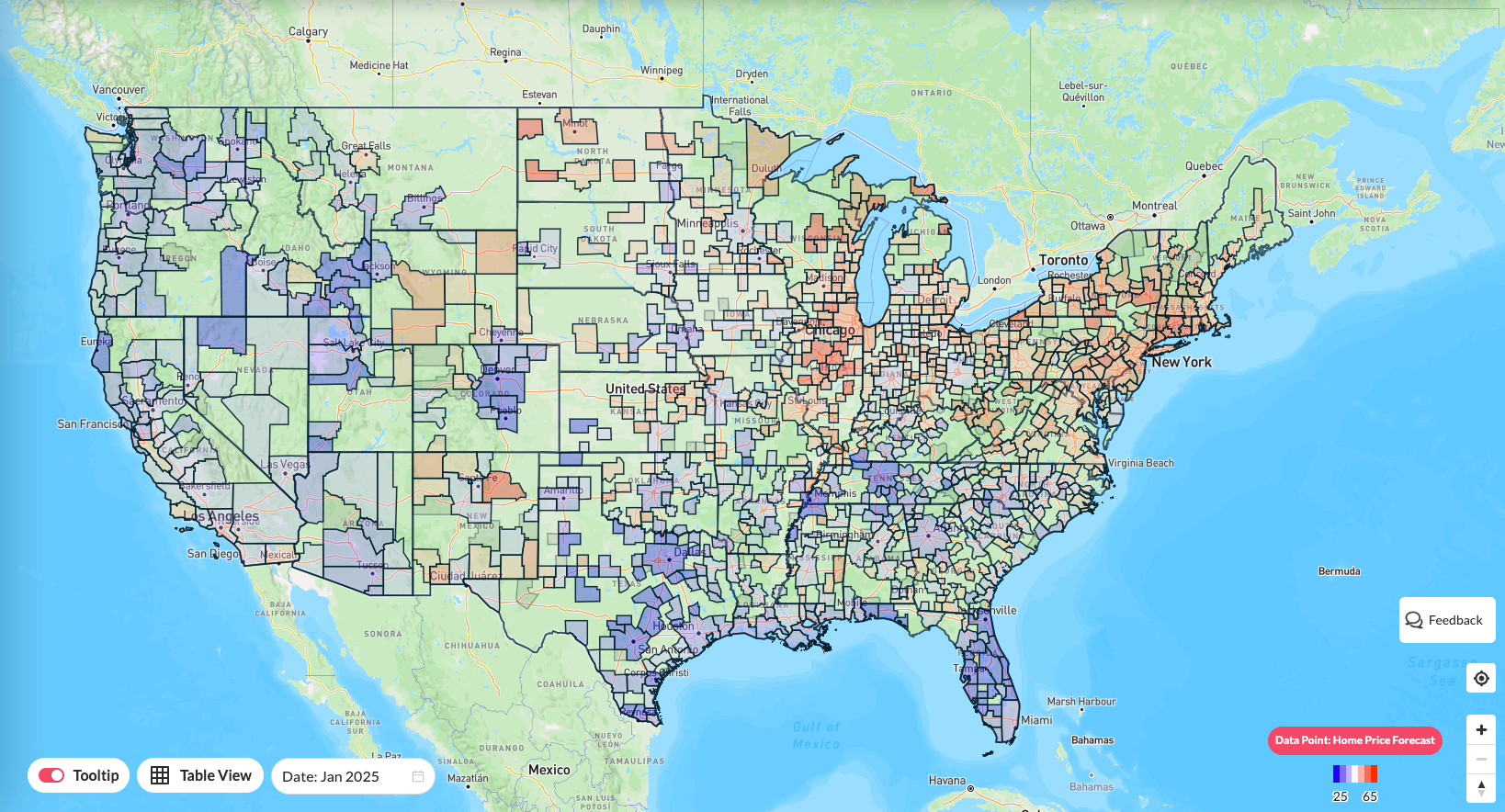
Reventure’s forecast for Memphis suggests additional home price declines could be ahead.
But understanding why the market has become so imbalanced requires looking beyond housing supply.
The bigger problem is jobs.
Memphis isn’t alone. Rising inventory and seller price cuts are appearing across several U.S. markets as the broader housing market correction continues
Memphis Has Barely Added Jobs in 20 Years
Memphis has benefited from many of the same advantages that have helped Tennessee attract residents and businesses, including relatively affordable housing and no state individual income tax on wages.
Yet the metro’s employment growth has been remarkably weak.
Bureau of Labor Statistics data shows the Memphis metro had roughly 650,000 payroll jobs in June 2026.
Twenty years earlier, in June 2006, it had approximately 644,000.
That’s essentially no net job growth over two decades.
The long-term employment chart puts that stagnation into perspective. Memphis has experienced several economic cycles since 2006, yet total payroll employment today remains remarkably close to where it stood two decades ago.

This matters enormously for housing. Sustained home price growth ultimately requires households with sufficient income and employment to support demand. And that’s what makes the arrival of one of America’s largest AI infrastructure projects particularly interesting.
This matters enormously for housing.
Long-term housing demand is ultimately supported by households, incomes, and employment. A metro can add new developments and attract major capital investments, but without meaningful job and population growth, there may not be enough additional buyers to absorb the housing supply.
And that’s where Memphis becomes an interesting test case for America’s AI investment boom.
Why the SpaceX AI Boom Hasn’t Created a Memphis Jobs Boom
Elon Musk’s xAI began developing its Colossus supercomputer in Memphis in 2024. The facility has since expanded dramatically, reaching around 200,000 GPUs, with further expansion underway.
AI infrastructure projects like Colossus can involve enormous amounts of capital.
But a multibillion-dollar data center isn’t necessarily comparable to a corporate headquarters or manufacturing plant employing thousands of people permanently.
Data centers require significant labor during construction and need specialized workers to operate and maintain them. However, once completed, the number of permanent employees can be relatively small compared with the project’s total investment.
Memphis illustrates that distinction.
Since xAI broke ground on Colossus in May 2024, Memphis metro payrolls have declined by approximately 12,000 jobs, or 1.8%.
If the massive AI investment were already producing a broad employment boom, we might expect Memphis payrolls to be moving sharply higher. So far, the opposite has occurred.

Importantly, that doesn’t mean Colossus caused Memphis to lose jobs. The city’s economic challenges predate xAI by decades. Rather, the data highlights something different: even an enormous AI infrastructure investment has not yet been enough to reverse the broader employment trend.
Over roughly the same period, U.S. payroll employment increased by about 0.9%.
That doesn’t mean Colossus caused Memphis to lose jobs. Memphis’ economic challenges existed long before xAI arrived.
But it does suggest that massive AI infrastructure spending has not yet translated into a broad local employment boom capable of reversing those trends.
Housing Hasn’t Seen an AI Boost Either
The same pattern is visible in real estate.
When Colossus broke ground in May 2024, the Memphis metro had approximately 3,514 active listings.
By June 2026, inventory had climbed beyond 5,400 listings.
That’s a roughly 53% increase in housing supply since the AI capital investment boom began.
Housing tells a similar story. Instead of tightening as workers poured into Memphis, the number of homes available for sale has expanded dramatically since construction on Colossus began.

Again, correlation isn’t causation. xAI isn’t responsible for Memphis’ housing slowdown. But the trend underscores the central point: large data center investments don’t necessarily generate enough permanent local jobs or new households to create a housing boom.
That distinction could become increasingly important as cities across America compete for AI investment.
Again, correlation isn’t causation. It would be misleading to blame xAI’s investment for Memphis’ housing slowdown.
Instead, the important takeaway is what hasn’t happened.
The enormous investment hasn’t produced enough broader economic growth to prevent inventory from surging or housing demand from weakening.
AI Data Centers May Not Transform Housing Markets
The Memphis experience could become increasingly relevant as communities across America compete for AI data centers.
The assumption is often straightforward: billions of dollars of new investment should mean more jobs, more residents, and stronger housing demand.
But the economic impact depends heavily on what is being built.
A major corporate headquarters can bring thousands of relatively high-income employees into a market. A large manufacturing facility can create extensive direct employment while supporting suppliers and other businesses.
A data center can require extraordinary capital investment without generating the same permanent employment footprint.
That distinction matters for housing investors attempting to identify the next technology-driven boomtown.
Following capital expenditure alone may not be enough. Job creation and household formation are what ultimately create sustained housing demand.
Memphis Housing Is Getting Cheaper
There is another side to Memphis’ weakness: affordability.
The combination of elevated inventory, sluggish employment growth, and more price cuts is creating opportunities for buyers willing to research individual neighborhoods carefully.
Memphis also remains substantially cheaper than several other Tennessee markets.
In neighborhoods such as Midtown, renovated century-old Craftsman homes can be found around $150 per square foot. Some properties are even returning to prices below what sellers paid during the pandemic housing boom.
Lower prices could also make Memphis increasingly interesting to investors, particularly since the metro has previously ranked among America’s highest cap rate housing markets
One recent example involved a seller accepting approximately a $30,000 loss compared with their 2021 purchase price.
You can already see that adjustment occurring at the individual property level. Some attractive Memphis homes are returning to prices below their pandemic-era purchase values as sellers compete against growing inventory.

One listing doesn’t define an entire housing market, and an asking price isn’t the same as a completed sale. But examples like this illustrate the negotiating opportunities that can emerge when inventory rises and buyers become more selective.
The question is whether those discounts become widespread enough to bring demand back.
That doesn’t automatically make a property a good investment. Memphis still faces substantial economic and social challenges, and conditions vary dramatically by neighborhood.
But lower prices can eventually create their own demand.
Could Falling Prices Finally Bring Buyers Back?
Memphis now has several major housing headwinds occurring simultaneously.
Inventory is far above normal. Job growth has been virtually nonexistent over the longer term. Homes are taking longer to sell, and nearly one-third of listings are receiving price cuts.
Meanwhile, the enormous AI data center buildout has not yet generated the broader jobs boom that might have helped absorb the additional housing supply.
That could mean more downward pressure on home prices before Memphis reaches equilibrium.
But falling prices also create opportunities.
Buyers considering Memphis should look beyond metro-wide averages and evaluate individual ZIP codes, neighborhoods, listings, and forecasts.
That’s particularly important in a market like Memphis, where conditions can change significantly from one ZIP code to the next. Rather than assuming the entire metro is equally overvalued or undervalued, buyers can compare local inventory, price trends, forecasts, and individual listings before making an offer.

That local data becomes especially valuable when sellers are already beginning to negotiate.
Reventure’s Listing Analyzer can help determine whether a particular property is priced appropriately relative to comparable homes, while Reventure’s 12-month home price forecast and fair value estimates can show where individual ZIP codes may be heading next.
With Memphis inventory surging and some sellers already accepting losses, the biggest question may no longer be whether the SpaceX AI Boom will save the housing market.
It’s how cheap Memphis housing needs to become before buyers finally come back.