Is the American Aging Population About to Reshape the U.S. Housing Market?

 August 21, 2026

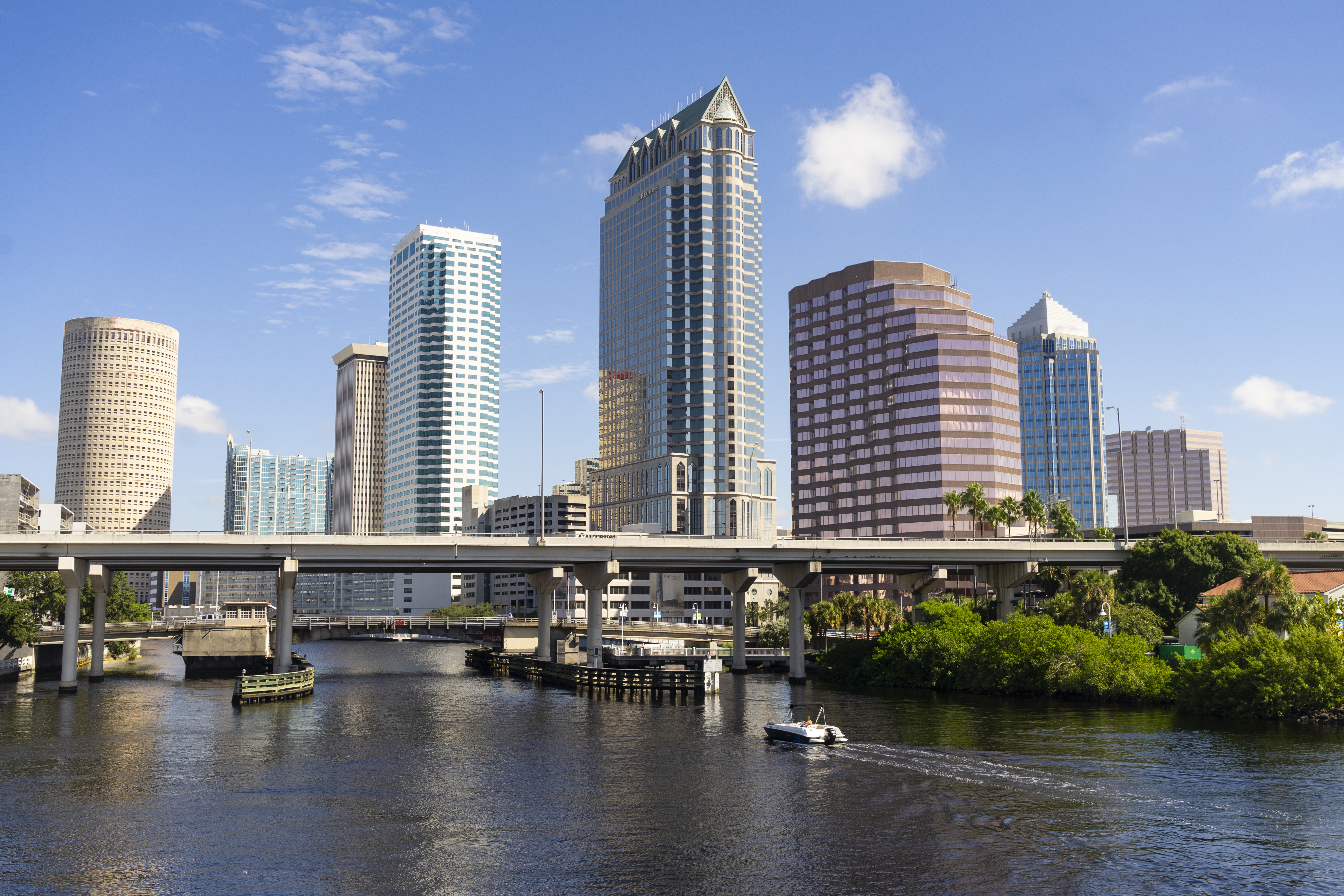
Two neighboring Florida counties are heading toward remarkably different demographic futures.
In Pinellas County, there are now roughly 43% more deaths than births, putting the county into severe natural population decline. Yet directly across Tampa Bay, Hillsborough County has about 41% more births than deaths, providing a much stronger foundation for organic population growth.
Same metro area. Similar climate. Completely different demographic trajectories.
And the divide is getting wider.
In 2009, Pinellas County had a birth-to-death ratio of approximately 0.87, meaning deaths exceeded births by about 13%. By 2025, that ratio had fallen to just 0.57, reflecting a dramatic deterioration in natural population growth.
That could have major implications for the American Aging Population and the U.S. housing market.
As birth rates decline and the population gets older, some counties could face more deaths, estate sales and housing inventory at the same time that fewer young households are forming to absorb that supply.
Meanwhile, younger markets with stronger birth rates could maintain population and housing demand for much longer.
By 2030 to 2035, this demographic divide could begin separating America’s housing market winners from its losers. The contrast is especially striking because these aren’t two markets on opposite sides of the country. They’re neighboring counties separated by Tampa Bay. Reventure’s demographic data shows just how dramatically their natural population trends have diverged.

American Aging Population Is Creating a New Housing Divide
For decades, housing investors have focused heavily on migration.
Where are Americans moving? Which states are gaining residents? Which cities are attracting businesses?
Those questions still matter.
But migration is only one component of population growth.
The other is natural population change—the difference between births and deaths.
A county can attract new residents while simultaneously experiencing more deaths than births. If migration eventually slows, that underlying demographic weakness can suddenly become much more important.
That’s increasingly relevant in Florida.
The state benefited enormously from domestic migration during and immediately after the pandemic. Millions of Americans were attracted by warmer weather, relatively low taxes and rapid economic growth.
But migration isn’t guaranteed to remain elevated forever.
And when it slows, demographics underneath the migration boom become much easier to see.
Pinellas County provides a striking example.
Pinellas County Now Has 43% More Deaths Than Births
Pinellas County has long had an older population, so deaths exceeding births isn’t entirely new.
What has changed is the magnitude of the imbalance.
Back in 2009, Pinellas had a birth-to-death ratio of approximately 0.87.
In other words, for every 100 deaths, there were roughly 87 births.
By 2025, the ratio had plunged to approximately 0.57.
The long-term trend makes the deterioration even clearer. Pinellas wasn’t always experiencing today’s level of natural population decline. Its birth-to-death ratio reached approximately 0.87 in 2009, before falling sharply over the following 16 years to just 0.57 in 2025.

Now there are only about 57 births for every 100 deaths—or roughly 43% more deaths than births.
That’s a dramatic deterioration in less than two decades.
And the demographic weakness is beginning to show up in broader population numbers.
Pinellas County ranked among the Top 10 U.S. counties for population loss in 2025, according to Census Bureau data cited in Reventure’s analysis.
And this demographic deterioration is no longer showing up only in birth and death statistics. It’s beginning to appear in Pinellas County’s headline population numbers. Census estimates show the county lost approximately 11,834 residents from July 2024 to July 2025, ranking second nationally for numeric population decline.

For housing investors, that’s worth paying attention to.
Population growth doesn’t determine home prices by itself. Housing supply, migration, employment, incomes and affordability all matter.
But over the long term, homes ultimately need households to occupy them.
American Aging Population Could Increase Housing Supply
The demographic effect doesn’t stop at weaker demand.
An aging population can potentially affect the supply side of the housing market as well.
As an area’s population gets older and deaths increase, more properties can eventually return to the market through estate sales.
Some will be inherited and kept by family members. Others will become rentals.
But many will eventually be sold.
That means an aging county could simultaneously experience slower household formation and increasing housing turnover from older generations.
This process won’t happen overnight.
But the decline in births that began more than a decade ago will become increasingly relevant as smaller generations enter their prime household-formation and home-buying years. This demographic shift is closely connected to the broader decline in U.S. birth rates, which could have major consequences for future housing demand.
That’s why demographics could become a much bigger housing story during the 2030s.
And just across Tampa Bay, we can already see what the opposite demographic profile looks like.
Hillsborough County Has a Much Stronger Demographic Foundation
Hillsborough County, home to Tampa, is experiencing the same broader slowdown in migration affecting other parts of Florida.
But its natural population growth looks dramatically different from Pinellas County.
Hillsborough currently has roughly 41% more births than deaths.
That gives the county a demographic advantage even if migration continues cooling.
New residents moving into a market can certainly boost housing demand. But births provide a longer-term pipeline of future households already living within the community.
Over time, those younger residents grow up, enter the workforce, rent apartments and potentially purchase homes.
That doesn’t guarantee Hillsborough home prices will outperform Pinellas.
But it creates a fundamentally different long-term demand profile.
If two neighboring counties both experience weaker migration, the county still generating organic population growth starts from a much stronger position.
Florida Has Entered Natural Population Decline
The Pinellas example is part of a broader shift.
Reventure’s birth-to-death data shows that Florida as a whole has fallen below a 1.0 birth-to-death ratio.
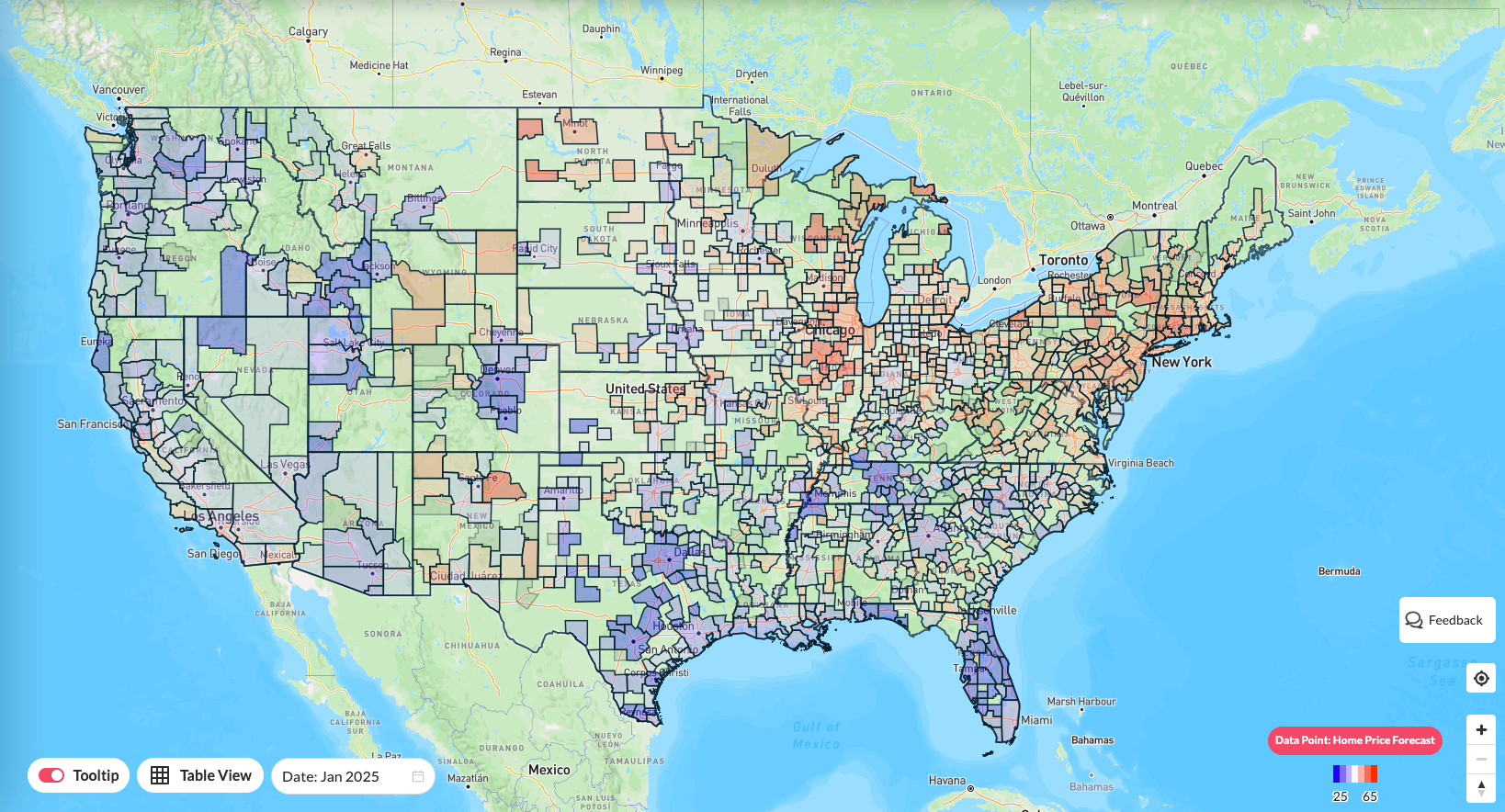
And Florida isn’t alone. Reventure’s national map shows a widening demographic divide across the country. Some states still have substantially more births than deaths, while others have already crossed below the 1.0 threshold into natural population decline.

A ratio below 1.0 means more residents are dying than are being born.
In other words, Florida increasingly depends on migration to maintain population growth.
That distinction could become extremely important.
During periods of strong migration, natural population decline can be hidden by an influx of new residents.
But if migration weakens, the underlying demographic deficit becomes harder to overcome.
This creates a potential long-term risk for markets heavily dependent on retirees and inbound migration.
States and counties with significantly more births than deaths, meanwhile, have another source of population growth that doesn’t depend entirely on attracting residents from elsewhere.
Could Demographics Predict Future Housing Market Winners?
Housing markets are typically analyzed using short-term indicators such as inventory, mortgage rates, home sales and price cuts.
Demographics move much more slowly.
But that can make them particularly useful for understanding long-term housing demand.
Consider two hypothetical markets.
One has an aging population, more deaths than births and weakening migration. The other has positive natural population growth, a younger population and similar migration trends.
Over a 10- or 20-year period, those markets could develop very different housing fundamentals.
The first could experience more homes returning to the market while household formation slows.
The second could have a larger pipeline of future households supporting demand.
That’s why investors shouldn’t assume today’s fastest-growing housing markets will necessarily remain the winners of the 2030s. That geographic divergence is already appearing in markets such as Upstate New York, where affordability and tight housing supply have pushed several previously overlooked metros to the top of national home price growth rankings.
What the American Aging Population Means for Housing by 2030
The demographic changes underway today could become significantly more visible over the next five to ten years.
Birth rates have been declining for years. Meanwhile, the large Baby Boomer generation continues moving deeper into retirement.
Those two forces are gradually changing the balance between housing supply and future household demand.
In older counties such as Pinellas, higher mortality could contribute to more estate sales and available housing inventory.
In younger counties such as Hillsborough, stronger natural population growth could provide more support for household formation and long-term housing demand.
Of course, demographics aren’t destiny.
A county with natural population decline can still prosper if it attracts enough workers, businesses and new residents. Likewise, a younger county can struggle if its economy deteriorates or housing becomes unaffordable.
But demographics provide a foundation that investors shouldn’t ignore.
The U.S. Housing Market Could Look Very Different by 2035
The housing boom of the early 2020s was largely defined by migration, remote work, low mortgage rates and an extraordinary shortage of homes.
The next housing cycle could increasingly be defined by something slower and more structural:
who actually lives in these markets—and how old they are.
Pinellas and Hillsborough Counties offer an early glimpse of that divide.
One has 43% more deaths than births. The other has 41% more births than deaths.
They’re separated by Tampa Bay, yet their underlying demographic trajectories are moving in opposite directions.
Reventure provides birth-to-death data for counties, metros and states across the U.S., sourced from the U.S. Census Bureau, allowing buyers and investors to compare these long-term demographic trends alongside housing market fundamentals.
For investors thinking beyond the next year or two, this data could become increasingly important.
The American Aging Population won’t transform housing markets overnight.
But by 2030 to 2035, the difference between markets that are organically creating new households and those increasingly dependent on migration could become one of the most important divides in American real estate.