Top 10 Cities Where Zillow Says Home Values Dropped the Most Last Month

 August 21, 2025

Home values are slipping in many U.S. cities. Some markets that once surged are now slowing down. If you own a home, this matters. If you are looking to buy, it matters even more. Zillow data shows that prices fell in several major metros last month. The drops are not small.
Some cities saw big corrections. In this article, we look at the top 10 cities where values dropped the most. We show how far prices fell. We also explain what is behind the decline. This will help you see where the market is heading right now.
Top 10 Cities with the Lowest Home Values
Several U.S. cities saw home values fall sharply in July 2025. Zillow data shows double-digit declines in some metros and steady losses in others. Each city faces different market pressures, but together they reveal a cooling housing market across regions.
1. North Port, FL – -8.5%
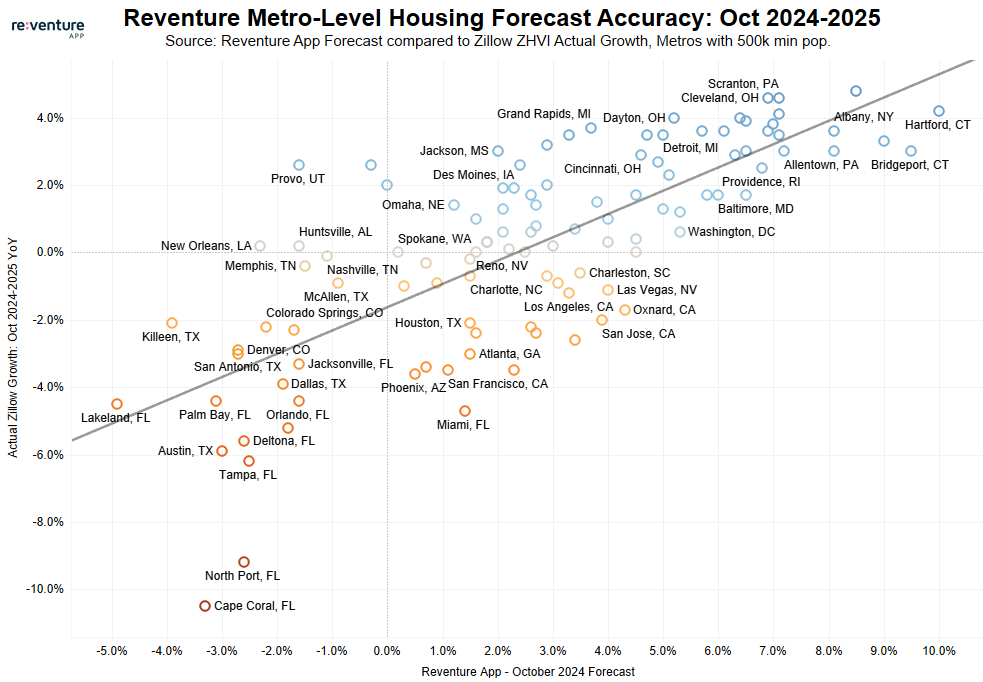
North Port recorded the steepest drop. Home values declined by -8.5% year over year. The typical price now stands at $413,855. Rising insurance costs and oversupply have pressured demand in Florida’s Gulf Coast. Buyers are cautious, and sellers are lowering prices to compete.
2. Austin, TX – -5.7%
Austin continued its correction after years of fast growth. Prices fell -5.7% to an average of $439,988. The tech sector slowdown and higher mortgage rates have cooled demand. Inventory levels are higher than last year, giving buyers more options and pushing prices down.
3. Tampa, FL – -5.6%
Tampa also saw a notable decline. Home values dropped -5.6% to $364,374. The market was overheated in previous years, and affordability challenges are now evident. With many new listings, buyers have regained some bargaining power.
4. Lakeland, FL – -4.2%
Lakeland recorded a -4.2% decline. The median home value is $305,245. This city benefited from spillover demand from Tampa and Orlando in the past years. Now, tighter budgets and higher costs of living are reducing buyer interest.
5. Phoenix, AZ – -3.5%
Phoenix home values fell -3.5% to $450,193. The city was one of the hottest pandemic boom markets. Since then, price corrections have been steady. Many homeowners are still sitting on large equity gains, but buyers are waiting for better affordability.
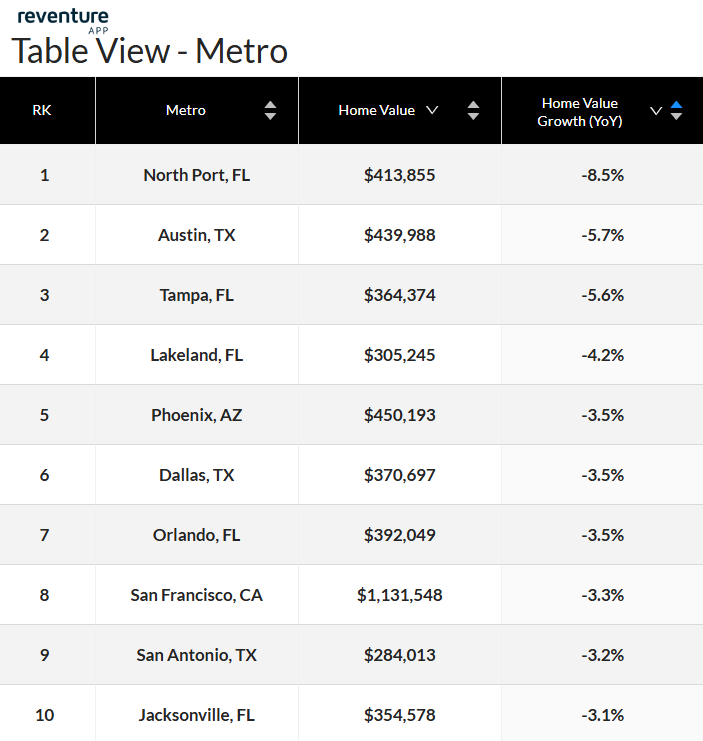
North Pole, Florida, has the highest home value growth YoY drop in 2025, reaching -8.5%. Access the above table here. [Link]
6. Dallas, TX – -3.5%
Dallas matched Phoenix with a -3.5% decline. The average value is $370,697. Job growth remains strong, but elevated mortgage rates are slowing sales. Investors, who once fueled the market, are less active now, leaving more homes available.
7. Orlando, FL – -3.5%
Orlando also reported a -3.5% fall. Home values are at $392,049. The city depends heavily on tourism and service sector employment. With economic uncertainty, local demand has softened. Listings are taking longer to sell compared to last year.
8. San Francisco, CA – -3.3%
San Francisco saw prices drop -3.3%. Despite the decline, the city’s median value is still the highest on the list at $1,131,548. High interest rates and tech layoffs have weighed on demand. Outmigration to cheaper metros continues to affect prices.
9. San Antonio, TX – -3.2%
San Antonio values fell -3.2%, reaching $284,013. It remains one of the most affordable large Texas metros. The decline reflects the broader Texas correction after years of growth. Buyers are looking carefully at costs before committing.
10. Jacksonville, FL – -3.1%
Jacksonville posted the smallest decline among the group. Home values are down -3.1% to $354,578. The city has seen strong in-migration, which cushions prices. Still, affordability limits are forcing gradual adjustments.
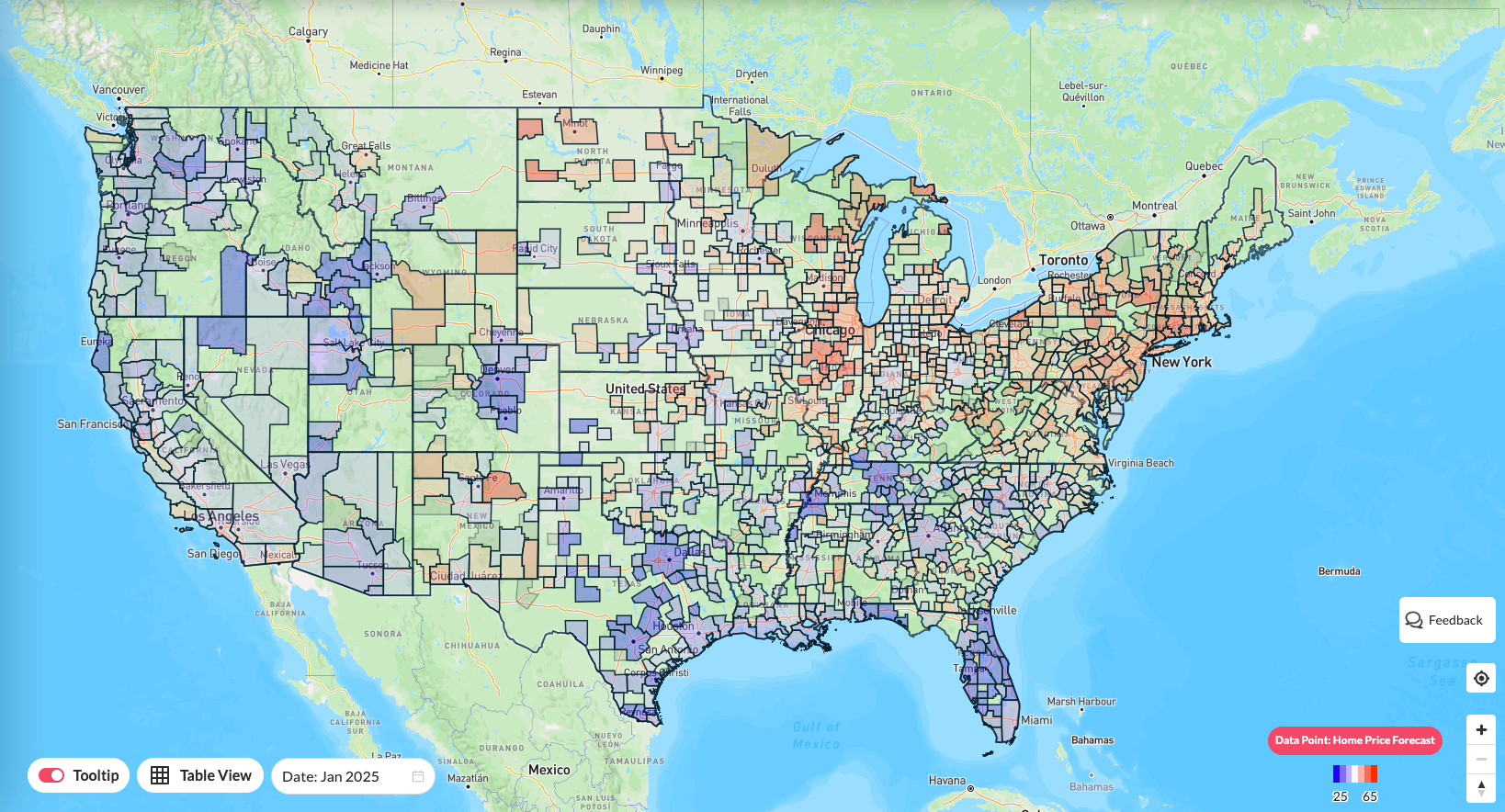
To help make sense of these market shifts at a more granular level, Reventure App offers home value data all the way down to the ZIP code for just $39/ month. Localized insight from Reventure App empowers buyers to spot undervalued neighborhoods. It also helps sellers align with current market realities, making it easier to make smarter, better-timed decisions in a cooling, yet still competitive, housing market.