


America’s largest home builder is quietly changing how it sells homes. That shift could become one of the biggest housing stories over the next several years. DR Horton’s Mortgage Strategy has evolved as housing demand weakens.
After selling more than 87,000 homes in 2025, compared to 82,000 for second-place Lennar, DR Horton has become the largest homebuilder in America by volume. Its enormous footprint across fast-growing markets in the South and West makes the company an important bellwether for the broader U.S. housing market.
Rather than relying primarily on deep price cuts, DR Horton has increasingly relied on its in-house lender, DHI Mortgage, along with mortgage-rate buydowns and a larger share of FHA loans to support home sales. Despite lowering its revenue guidance after demand came in below expectations, the builder continues selling homes well above pre-pandemic levels, making its financing strategy an important trend for investors and homebuyers to watch.

DR Horton’s Mortgage Strategy Is Helping Preserve Sales Volume
The biggest surprise in DR Horton’s latest earnings wasn’t simply that demand weakened. It was how well the company has managed to maintain sales despite that softer environment.
Management acknowledged that orders came in below expectations and reduced its near-term revenue outlook. Normally, weaker demand would force builders to slash prices aggressively to move inventory. Lennar has largely followed that path, cutting average selling prices by roughly 25% from their 2022 peak.
DR Horton has taken a different approach. Instead of relying primarily on price reductions, its average selling price has declined by only about 12% from peak levels. Even with smaller discounts, the builder has largely maintained sales volumes that remain approximately 70% above pre-pandemic levels.
One possible reason is the company’s growing use of financing incentives.
Today, 82% of DR Horton’s homebuyers finance their purchase through DHI Mortgage, the builder’s in-house lending division. That gives the company significantly more flexibility to offer mortgage-rate buydowns, closing-cost assistance, and financing programs that can reduce monthly payments without dramatically lowering advertised home prices.
This approach allows DR Horton to preserve pricing while expanding the number of buyers who can still qualify for a mortgage in today’s high-rate environment.

FHA Loans Are Becoming a Much Larger Part of the Business
One of the most notable changes within DR Horton’s mortgage strategy is the larger share of FHA loans in its mortgage originations.
According to the company’s recent disclosures, FHA mortgages accounted for only about 24% of DR Horton’s mortgage originations in early 2022. By 2026, that figure had climbed to approximately 45%. During the same period, conventional Fannie Mae and Freddie Mac mortgages declined from 58% of originations to just 35%.
The company’s disclosures show just how dramatically its mortgage mix has shifted over the past several years.
That represents a meaningful change in the type of borrower purchasing new homes.
FHA loans are designed primarily for first-time buyers and households with smaller down payments. Many borrowers qualify with as little as 3.5% down, making homeownership accessible to buyers who might otherwise struggle to purchase a newly built home.
For a builder facing slower demand, expanding access to FHA financing can naturally widen the pool of potential buyers. It does not necessarily indicate that lending standards have weakened, but it does reflect a strategic shift toward serving a different segment of the housing market.
The important point is that FHA borrowers historically perform differently than conventional borrowers during periods of housing stress.
FHA Delinquency Rates Remain Much Higher Than Conventional Mortgages
The reason this financing shift deserves attention is found in national mortgage performance data.
According to the Mortgage Bankers Association’s National Delinquency Survey, the average delinquency rate for FHA mortgages reached 11.88% during the first quarter of 2026. By comparison, conventional mortgages recorded a delinquency rate of only 2.75% during the same period.
It’s important to note that these Mortgage Bankers Association delinquency rates are national averages across all lenders. They are presented to provide context on how different mortgage products have historically performed and should not be interpreted as the delinquency rate for DR Horton or DHI Mortgage borrowers.
VA loans fell between the two, with delinquency rates around 4.99%, while the overall mortgage market stood at 4.44%.
These figures do not mean that DR Horton borrowers will experience the same outcomes. Delinquency statistics represent national averages across all lenders and markets. However, they do illustrate that FHA loans have historically experienced higher delinquency rates than conventional mortgages, particularly during periods of economic stress.
The combination of a larger FHA loan mix and higher national FHA delinquency rates makes this an important trend to monitor, particularly if home prices continue softening in some markets.
Low Down Payments Can Leave Homeowners More Exposed
The increase in FHA lending becomes especially important in markets where home prices have already begun to soften. Buyers who purchase homes with small down payments typically build equity more slowly, making them more vulnerable if property values decline during the first few years of ownership.
That does not mean FHA borrowers are destined to experience financial trouble. Millions of homeowners successfully use FHA loans every year. However, lower initial equity means even modest price declines can leave some recent buyers owing more on their mortgage than their home is worth, particularly after accounting for transaction costs.
This dynamic is especially relevant in parts of the Sun Belt, where inventory has increased significantly over the last two years, and home price appreciation has cooled or reversed in many markets.
A Recent Listing Shows Why This Trend Is Worth Watching
One recent listing illustrates how quickly equity can disappear for some homeowners who purchased near the market peak.
A DR Horton home sold in 2022 using financing through DHI Mortgage recently appeared on the market as a short sale with an asking price of approximately $200,000. The property originally sold for roughly $330,000, representing a potential decline of about 39% before transaction costs.
Public records indicate the original mortgage balance was approximately $314,441, suggesting the buyer began ownership with relatively little equity.
One recent transaction illustrates how quickly equity can disappear for some recent buyers in markets where prices have fallen.

This is only one example and should not be interpreted as representative of all DR Horton communities or all FHA borrowers. However, it illustrates how homeowners who purchase with relatively low down payments may have less equity available if local home prices decline materially.

If more markets experience similar price corrections, these types of listings could become more common.
DR Horton’s Mortgage Strategy Reflects a Changing Housing Market
The broader story is not about one individual listing. It is about how America’s largest homebuilder has adapted to a much more challenging housing environment.
Rather than competing primarily through large price reductions, DR Horton’s Mortgage Strategy has increasingly focused on financing solutions. Mortgage-rate buydowns, builder incentives, and a larger share of FHA financing have helped expand affordability for buyers while allowing the company to maintain stronger pricing than many competitors.
From a business perspective, that strategy has helped preserve sales volume remarkably well. Despite weaker demand and reduced revenue guidance, DR Horton continues selling substantially more homes than it did before the pandemic.
The strategy also reflects a broader shift taking place across the housing industry. High mortgage rates have made monthly payments the biggest obstacle for many buyers. Builders increasingly have flexibility to address affordability through financing incentives rather than headline price cuts.
Why This Matters for Texas, Florida, Arizona, and Georgia
DR Horton has significant exposure across many of the country’s largest Sun Belt housing markets.
States such as Texas, Florida, Arizona, and Georgia experienced some of the nation’s fastest home price appreciation during the pandemic. Many of those same markets are now seeing higher inventory levels, longer selling times, and increasing price reductions.
If home prices stabilize, DR Horton’s financing strategy may continue helping buyers enter the market without creating widespread financial stress.
However, if prices continue to weaken in these regions, homeowners who purchased recently with relatively small down payments may have less equity to absorb further declines. Combined with the historically higher national delinquency rates associated with FHA mortgages, this is a trend worth monitoring over the coming years rather than a conclusion about future outcomes.
Track Your Local Builder Market with Reventure
Housing conditions vary dramatically from one market to another.
Some metro areas continue experiencing tight inventory and stable prices, while others are seeing rapid increases in listings and growing buyer leverage. Understanding those local trends is becoming increasingly important for both buyers and homeowners.
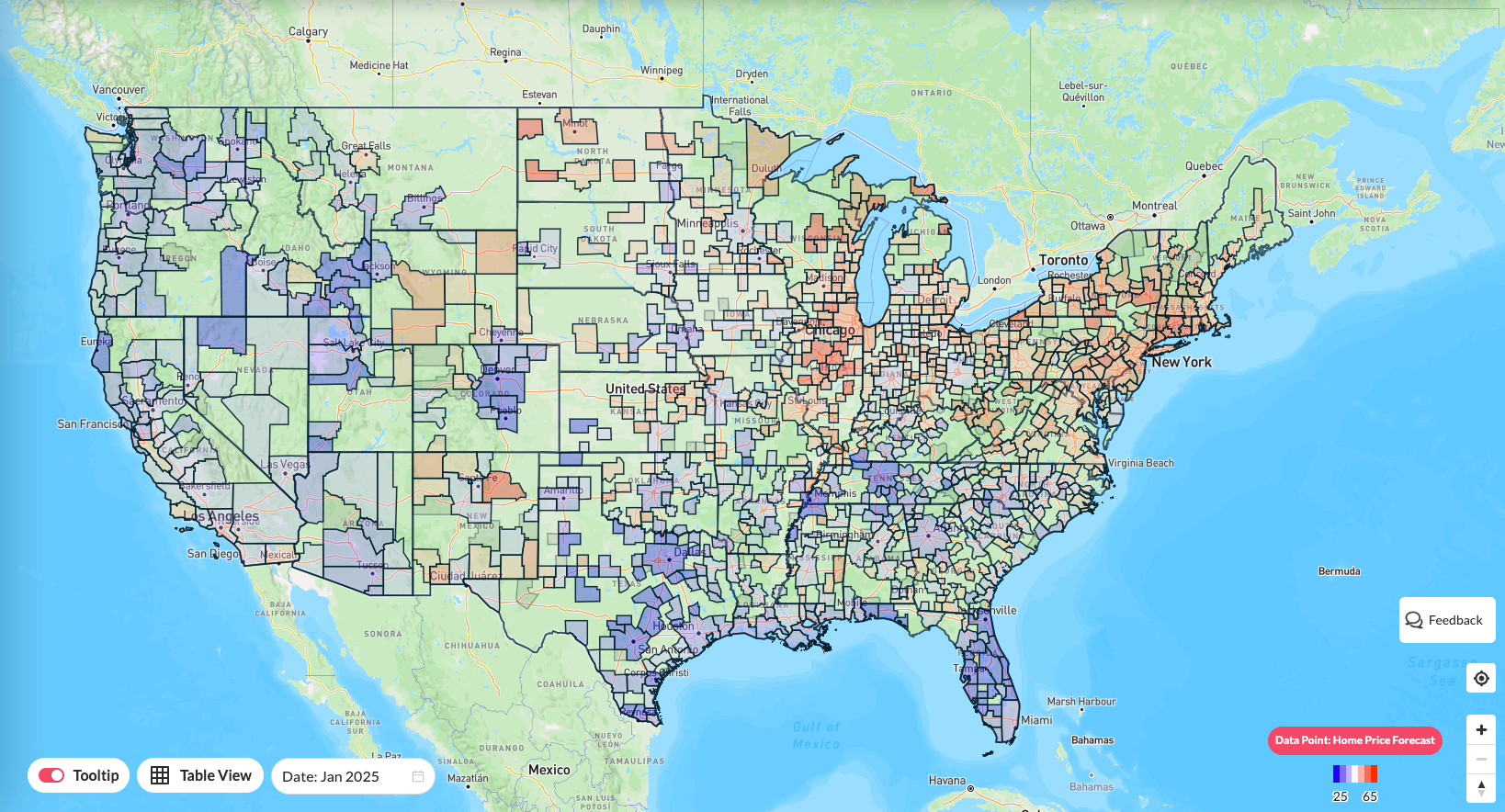
The Reventure App allows you to track inventory levels, home value trends, builder activity, and Reventure’s 2027 housing forecast for your ZIP code. These local data points can provide valuable context for understanding whether builders in your area are becoming more aggressive with pricing or financing incentives.

DR Horton’s Mortgage Strategy Is a Trend Worth Watching
DR Horton’s Mortgage Strategy highlights how America’s largest homebuilder is adapting to a housing market shaped by higher mortgage rates and softer buyer demand.
The company now finances 82% of its home sales through DHI Mortgage, while FHA loan originations have increased from 24% to 45% since 2022. At the same time, conventional mortgages have become a smaller share of its lending mix. National data from the Mortgage Bankers Association also shows that FHA loans currently experience higher delinquency rates than conventional mortgages, making this shift particularly noteworthy.
None of this proves future mortgage distress or suggests that DR Horton’s lending practices are inappropriate. Instead, it identifies an observable trend in the company’s financing mix that deserves attention as the housing market evolves. If home prices remain stable, the strategy may continue supporting home sales. But if prices decline further across key Sun Belt markets, the combination of lower homeowner equity, a larger share of FHA financing, and historically higher national FHA delinquency rates could become an increasingly important housing trend to monitor over the next several years.





One Response