In 2025, the housing market is breaking old rules. What once seemed certain about prices no longer holds true. Fresh designs, untouched walls, and modern finishes always came with a bigger price tag. But this year, the story has changed.
Buyers are now asking a new question: ‘Should I pick a new build or an existing home?’ The answer isn’t as obvious as before. Market forces have shifted. Builders are making bold moves to attract buyers. At the same time, existing homeowners are holding firm on price.
The gap between the two has never been closer. Let’s explore why new homes may now be the smarter choice.
The Data Behind the Price Shift Between New and Existing Homes
For many years, Census Bureau data showed new homes selling at higher prices. Buyers expected to pay more for a house that had never been lived in. Existing homes listed by NAR usually came at a discount. The chart shows this pattern clearly as new homes almost always tracked higher, even during downturns.
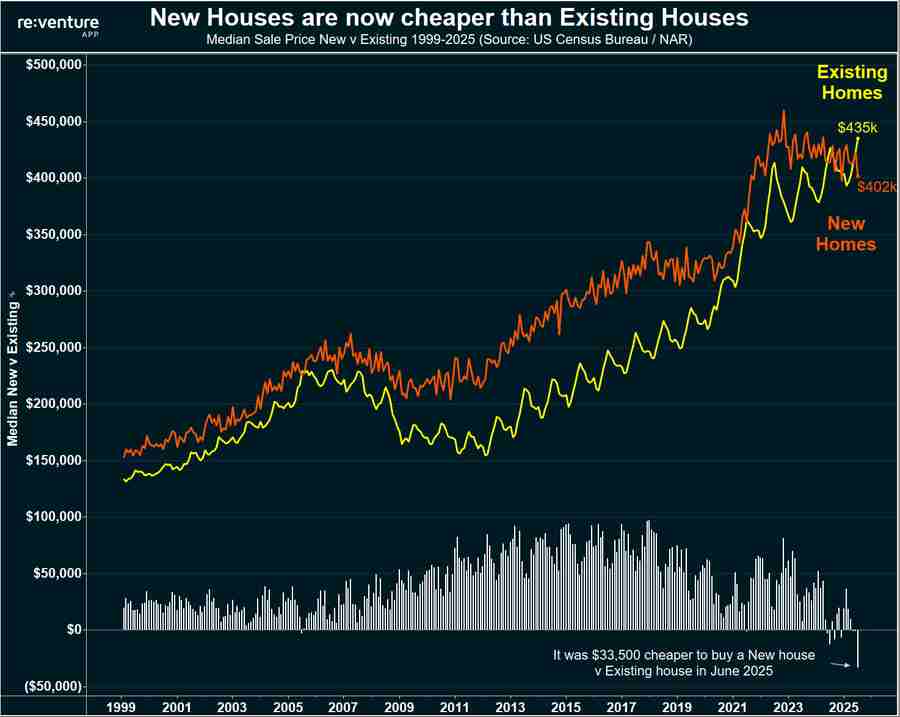
In June 2025, the median price of a new home was $401,800 compared to $435,300 for an existing home, an 8% gap.
In June 2025, the trend reversed. The median price of a new home was $401,800. Existing homes sold for $435,300. That is a gap of $35,300 or about 8 percent cheaper to buy new. This is the most affordable point on record to choose a new house over an existing one. For buyers, this marks a rare moment in housing history.
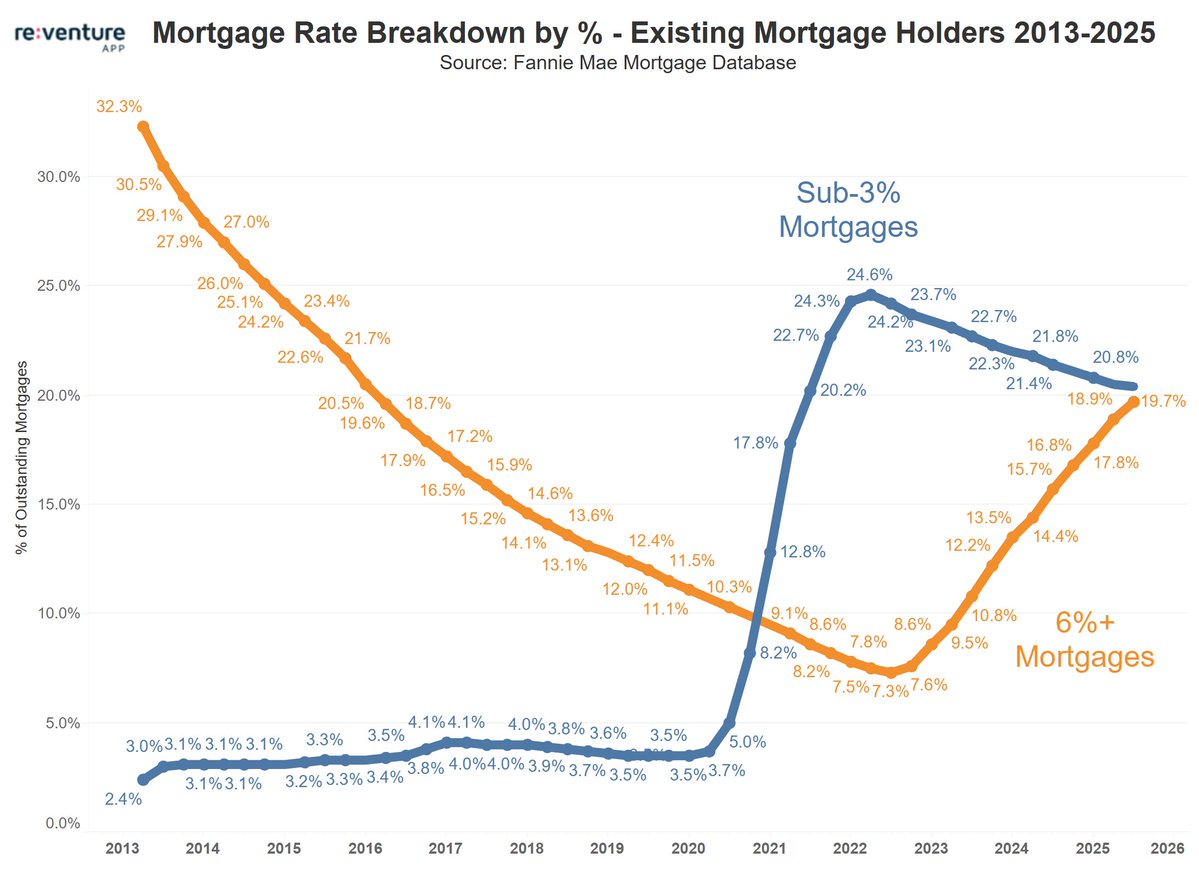
The reasons are easy to see. Builders have inventory they need to move and are willing to cut deals. Existing homeowners are often locked into ultra-low mortgage rates from past years and are reluctant to sell unless they can demand a higher price.
Builders are also offering mortgage rate buydowns, which lower the buyer’s interest rate during the early years of the loan. This makes monthly payments lighter and adds to the advantage of buying new in 2025. With these changes in mind, it is worth looking at the main pros of choosing a new construction home this year.
Pros of Buying a New Construction Home in 2025
Here are some of the pros of buying a new construction home in 2025:
Affordability
The first benefit is price. For the first time in decades, new homes cost less than existing ones. Buyers can get a brand-new property and still save money. It is a rare chance to pay less without giving up quality.
Incentives
Builders are also offering strong incentives. Many are covering closing costs or adding free upgrades. Mortgage rate buydowns make payments easier in the early years of a loan. These extras reduce the financial stress of buying a home and make new construction more attractive than ever.
Modern design & Efficiency
New homes also bring modern design. They have better insulation and stronger building standards. Most include energy-saving systems and smart features. These cut down utility bills. They also reduce the need for repairs. Older homes often need upgrades, but new ones start fresh.
Customization & Warranty
Another benefit is choice. Buyers can pick layouts, finishes, and styles they like. On top of that, builders give warranties. This protects against problems after moving in. The result is peace of mind. Lower bills, fewer repairs, and extra protection make new homes a strong option in 2025.
With so many positives, buyers may wonder if there are any drawbacks. New homes do have some.
Cons of Buying a New Construction Home in 2025
Here are some of the cons of buying a new construction home in 2025:
- Location: Most new construction is outside major cities. These homes are often in suburban or even exurban areas. Commutes can be longer. Daily services may take more time to reach.
- Lot Size and Community Growth: New homes typically have smaller yards. Trees are young, and streets can look bare. Community spaces and shops may take years to develop. Early buyers live with less convenience.
- Delays: Construction can run late. Weather, materials, or labor shortages may push back move-in dates. Buyers need patience.
- Character and Neighborhoods: Older homes sit in established areas. They may offer mature landscaping, charm, and central locations. New houses often lack that history.
In short, the choice depends on priorities. Some buyers value price and features. Others value location and community feel. For buyers weighing new builds against existing homes, Reventure App offers home value data all the way down to the ZIP code for just $39/ month. Localized insight from Reventure App empowers buyers to spot undervalued neighborhoods. It also helps sellers align with current market realities, making it easier to make smarter, better-timed decisions in a cooling, yet still competitive, housing market.