Reventure Housing Demand Index Increases to 11/100 in March 2026. Demand Remains Weak

 March 18, 2026
What the Reventure Housing Demand Index Is Signaling Right Now
The housing demand collapse from 2023 to 2026 is becoming one of the clearest signals of weakness in the U.S. housing market, with new data from Reventure showing buyer activity at historically low levels.
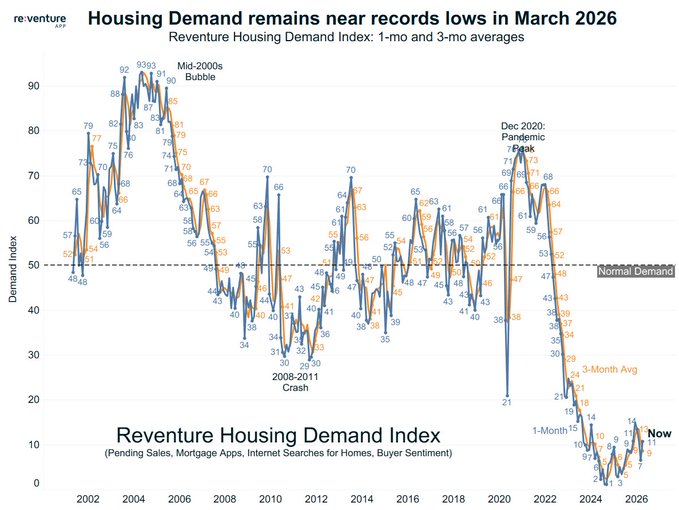
As of mid-March 2026, the Reventure Housing Demand Index has fallen to just 11 out of 100, one of the lowest readings on record. While that represents a slight improvement from last week’s 8 out of 100, demand remains firmly in recession territory. Importantly, current demand levels are now below the lows experienced during the 2008–2012 housing crash, highlighting just how weak buyer activity has become.
The Reventure Housing Demand Index is a forward-looking indicator designed to track real-time shifts in housing demand before they show up in closed sales. It combines several leading metrics, including pending home sales, mortgage applications, internet searches for homes, and buyer sentiment. Because these indicators reflect early-stage buyer behavior, they tend to precede changes in actual transaction volume by several months.
Housing Demand in 2026 Is Now Worse Than the 2008 Crash
This housing demand collapse over the last several years is notable not just for its severity, but for how persistent it has become. Buyer demand is now down more than 30 percent compared to pre-pandemic norms, and the three-month moving average of the index has dropped to just 8 out of 100.
That suggests a structural slowdown in buyer activity rather than a temporary dip, and the metrics have not garnered much improvement over the last several years. Even though mortgage applications and home search activity ticked slightly higher in recent weeks, the overall trend remains deeply negative.
Historically, when demand falls to these levels, it leads directly to weak home sales in the months that follow. Early signals already point to March and April 2026 existing home sales coming in at some of the lowest levels ever recorded outside of the pandemic lockdown period. In other words, the demand collapse is not just theoretical — it is already feeding into real declines in housing activity.
Record-Low Buyer Sentiment Is Driving the Housing Demand Collapse
A key driver of this housing demand collapse in 2026 is the sharp deterioration in buyer sentiment. According to University of Michigan data, approximately 78 percent of Americans now believe it is a bad time to buy a home. That figure is historically unprecedented and far above the long-term average of around 30 percent. When such a large share of the population views the housing market negatively, it creates a powerful psychological barrier that keeps buyers on the sidelines.
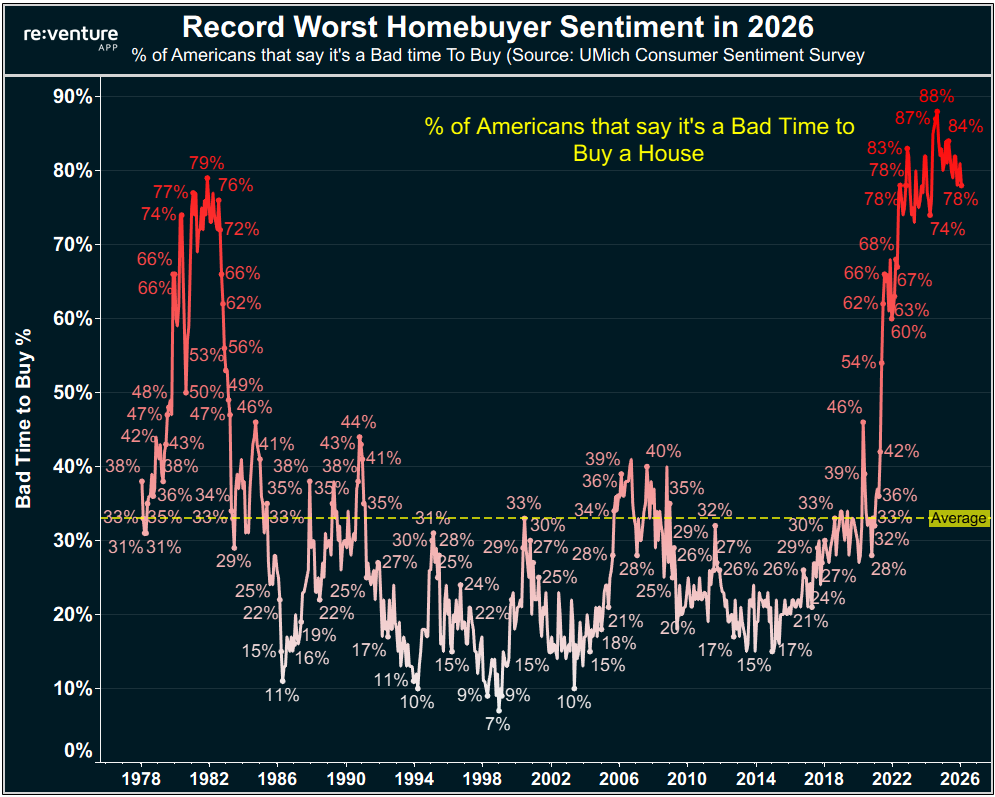
This matters because sentiment directly impacts behavior. Many potential buyers are choosing to delay their home search entirely, waiting for lower prices or improved affordability. While some analysts dismiss sentiment as “soft data,” its impact becomes very real when it suppresses demand across the entire market. If buyers are not even entering the process, transaction volume inevitably declines.
Pending Home Sales Are Now at Record Lows in 2026
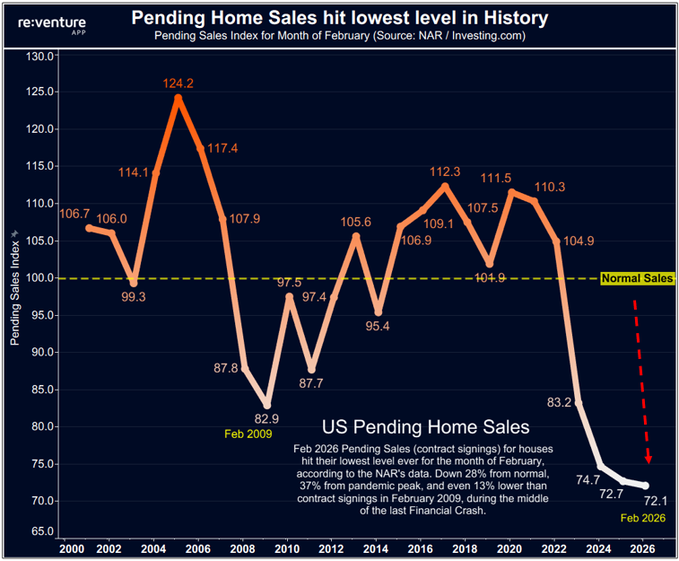
The effects of this demand collapse are already visible in hard data, particularly in pending home sales. Contract signings in January and February 2026 came in at the lowest levels ever recorded for those months, according to National Association of Realtors data. Because pending sales lead to closed transactions, this signals that overall home sales volume will remain extremely weak in the near term.
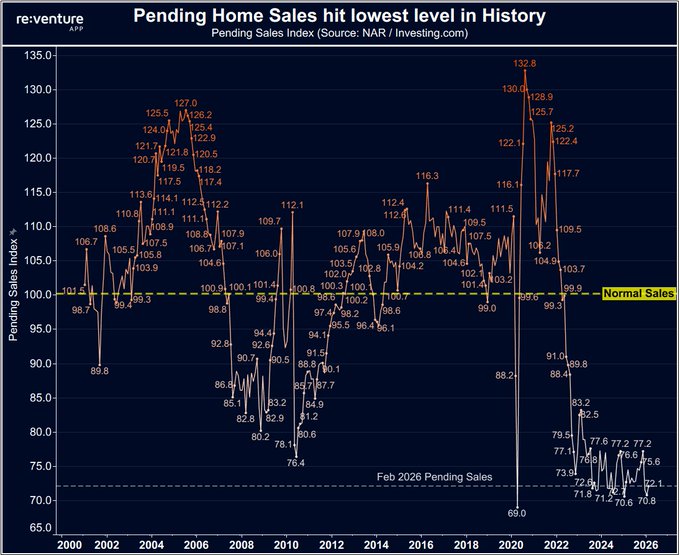
The connection between demand, sentiment, and sales is becoming increasingly clear. Fewer buyers are searching for homes, fewer are submitting offers, and fewer deals are being finalized. This chain reaction is what defines a true housing demand collapse, and it is now playing out in real time across the U.S. market.
Housing Market Forecast 2026: Flat National Prices, Local Price Drops
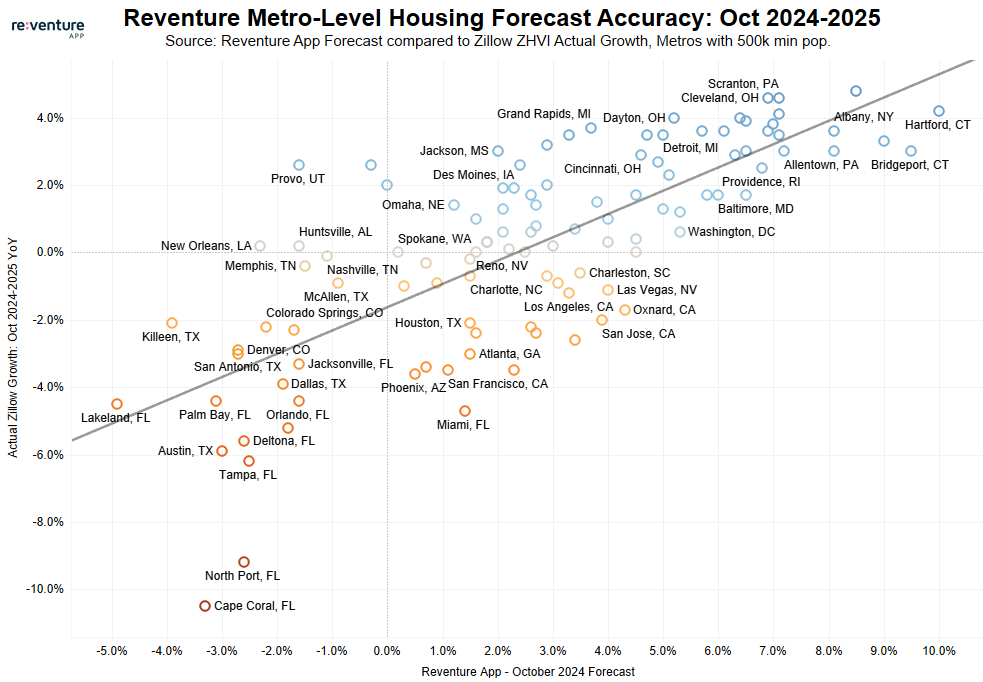
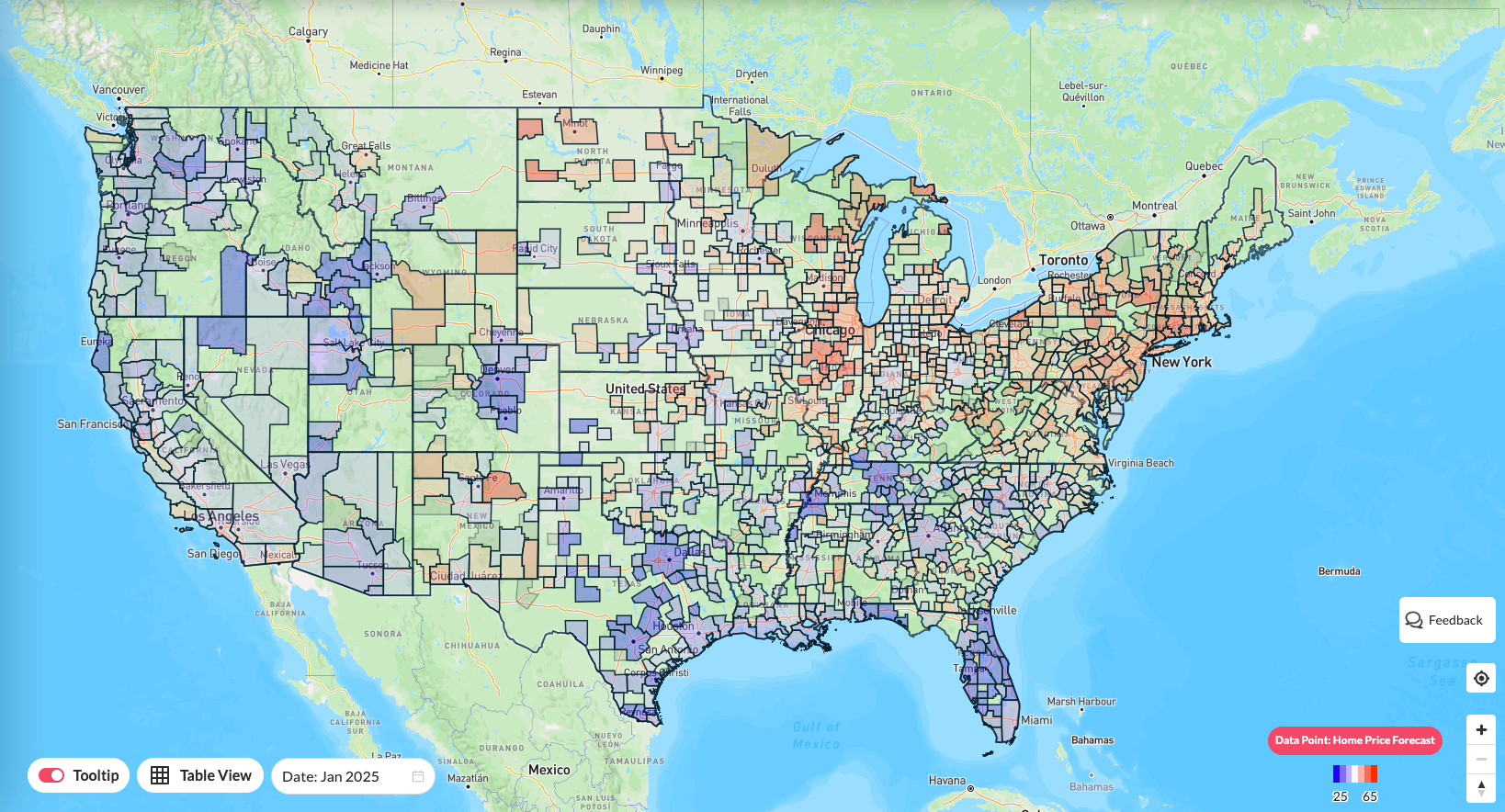
Looking ahead, Reventure’s latest housing market forecast reflects this weak demand environment. The firm currently projects national home prices to change by just 0.2 percent through February 2027, effectively signaling flat price growth at the national level. However, that headline number masks significant variation beneath the surface, with nearly half of U.S. states expected to experience outright price declines.
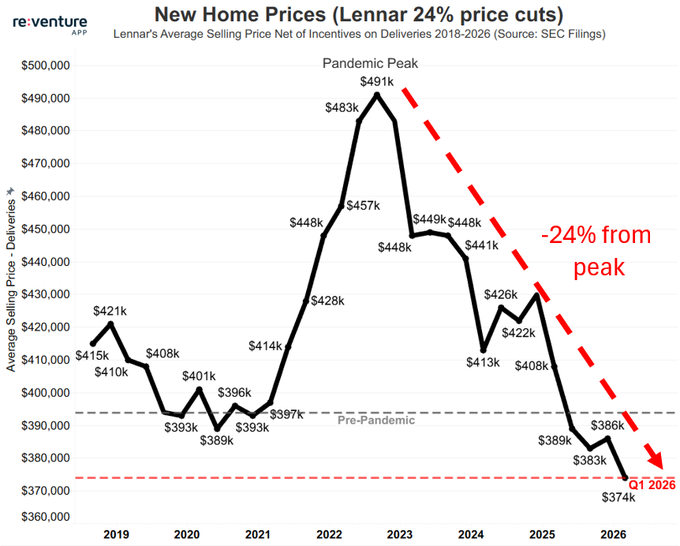
Ultimately, the housing demand collapse in 2026 reinforces a simple dynamic: without meaningful price reductions, buyers are unlikely to return at scale. Affordability remains stretched, sentiment remains negative, and demand remains historically low. Until those conditions change, the housing market will continue to struggle with weak sales and uneven price performance.