Pending Home Sales continue Collapse to Historic Lows
The U.S. housing market just hit another major downside milestone. Pending home sales dropped to their lowest level ever recorded for the month of February, signaling a continued collapse in buyer demand.
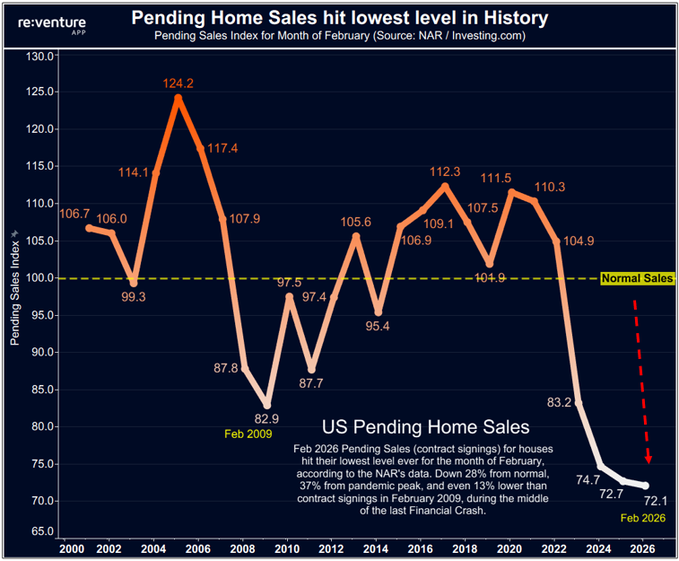
According to the National Association of Realtors, the Pending Home Sales Index came in at 72.1 for February 2026. That reading is 28% below normal February levels and down compared to last year. More notably, it is now 13% lower than February 2009, which occurred during the depths of the last housing crash.
This is not just a weak data point. It reflects a housing market where demand has fallen to historically depressed levels.
Pending home sales are one of the most important forward-looking indicators in real estate because they measure contract signings rather than closed transactions. In other words, they provide an early signal of where the market is heading. And right now, that signal is clearly pointing down.
The broader trend reinforces this view. Housing demand has been steadily declining for over two years, with fewer buyers willing or able to enter the market. Even during periods where activity stabilizes briefly, it has consistently failed to return to normal levels.
A healthy housing market typically sees a Pending Home Sales Index around 100 or higher. Today’s reading in the low 70s highlights just how far demand has fallen from that benchmark. The current environment is not just slow. It is historically weak.
Why the Monthly Increase Doesn’t Change the Trend
There was a small increase in February, with pending home sales rising 1.8% from January. On the surface, that may appear to be a positive development. However, the context behind that increase is critical.
January posted one of the weakest readings ever recorded. The index rose from 70.8 in January to 72.1 in February. While that is technically an increase, it represents only a modest bounce from extremely low levels.

Short-term fluctuations like this are common when a market is operating near cyclical lows. Small monthly gains or losses do not necessarily indicate a shift in trend. Instead, they often reflect normal volatility within a broader downtrend.
More importantly, the year-over-year data remains negative, and overall activity is still near record lows. That means the underlying demand environment has not materially improved.
When evaluating housing data, it is important to focus on the bigger picture rather than isolated monthly movements. In this case, the bigger picture shows a market that continues to struggle with weak buyer activity.
The February increase does not change that reality. It simply reflects a minor rebound within a much larger and more persistent downturn.
Mortgage Rates Are Rising Again, But Prices Are the Real Constraint
Looking ahead, the trajectory of mortgage rates introduces additional uncertainty into the housing market.
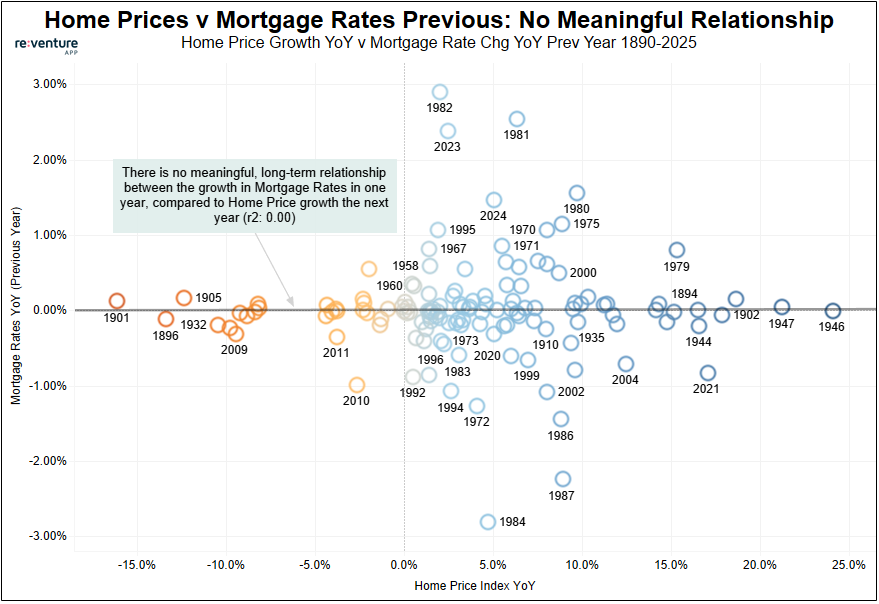
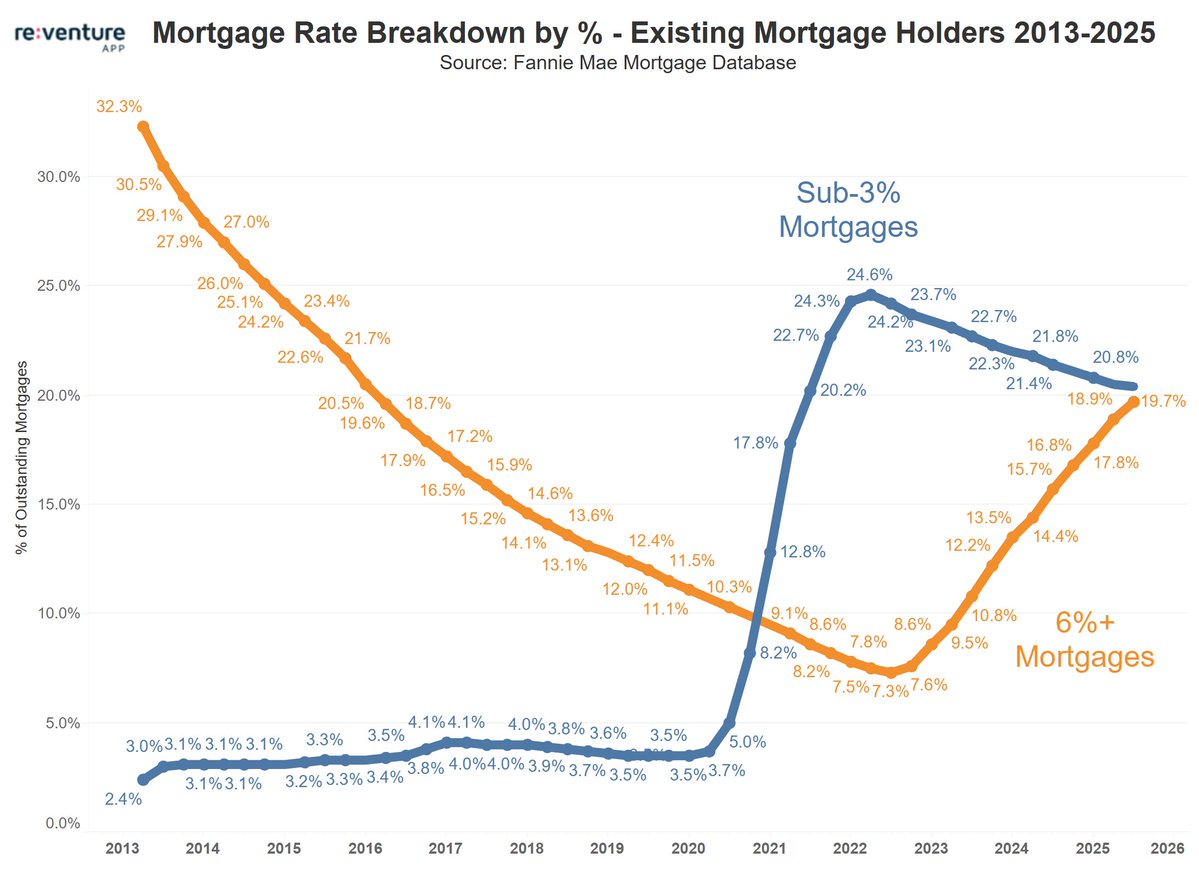
After briefly dipping below 6% earlier this year, mortgage rates have moved back up into the 6.3% to 6.4% range. That puts borrowing costs near their highest levels in several months and raises questions about how demand will respond.
One possibility is that the temporary decline in rates earlier in the year pulled some buyers into the market sooner than they otherwise would have acted. If that is the case, demand in the coming months could weaken further as rates rise again and affordability tightens.
However, mortgage rates are only part of the story.

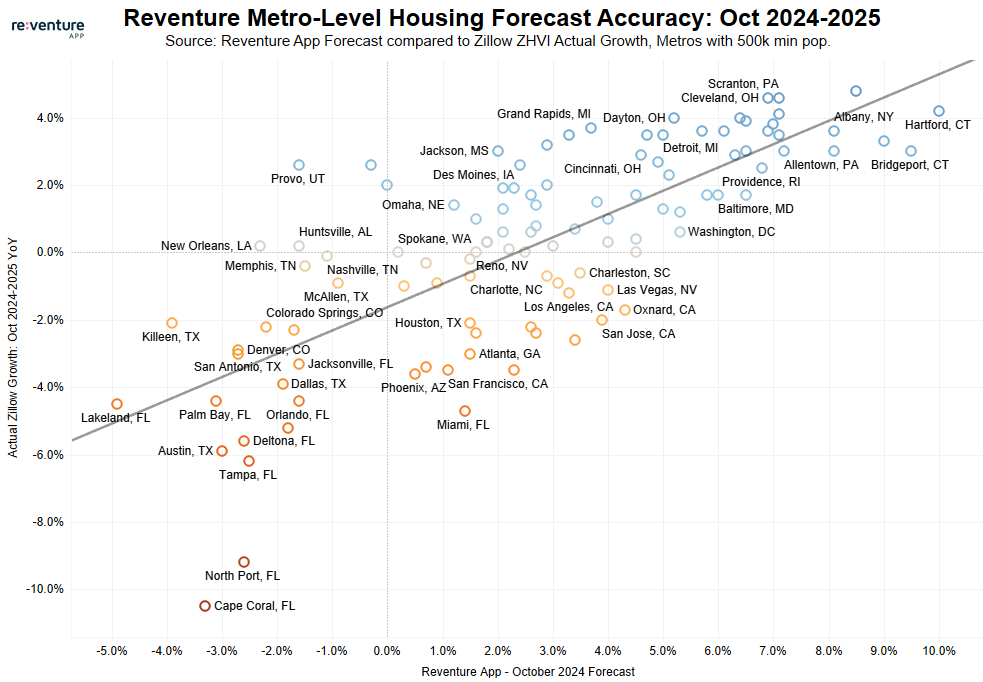
The more fundamental issue is the level of home prices. Nationally, home prices remain near all-time highs, particularly when adjusted for inflation. While some regions, especially in the West and parts of the South, have seen modest price declines, those decreases have not been sufficient to restore affordability.
Buyers today are facing a combination of challenges. Monthly payments are significantly higher than they were just a few years ago. The job market is showing signs of slowing. And household budgets are being stretched by broader cost pressures.
As a result, many potential buyers are choosing to stay on the sidelines.
This dynamic helps explain why demand remains so weak even when mortgage rates fluctuate. Without meaningful improvement in affordability, small changes in rates are unlikely to drive a sustained recovery in housing activity.
The Bottom Line: Demand Will Stay Weak Without Better Affordability
A longer-term perspective makes the current situation even clearer.
Mortgage rates in the 6% range are not unusual when viewed historically. Over the last century, rates at this level have been relatively common and are not inherently restrictive to housing demand.
What stands out today is the level of home prices. Inflation-adjusted home prices are near record highs and remain significantly elevated compared to historical norms. This disconnect between prices and incomes is a key factor behind the current demand slump.
In simple terms, housing has become too expensive for a large portion of potential buyers.
For demand to recover in a meaningful way, affordability needs to improve. That can happen through a combination of lower mortgage rates, rising incomes, or declining home prices.
Of those factors, home prices represent the most direct and immediate lever. Without a significant adjustment in prices, it is difficult to see how demand returns to normal levels.
Until then, the housing market is likely to remain constrained by weak buyer activity. And if economic conditions soften further, demand could face additional downside pressure in the months ahead.
Track Housing Market Trends with Reventure
If you want to understand where home prices and demand are heading in your local market, it is critical to track the data at a more granular level.
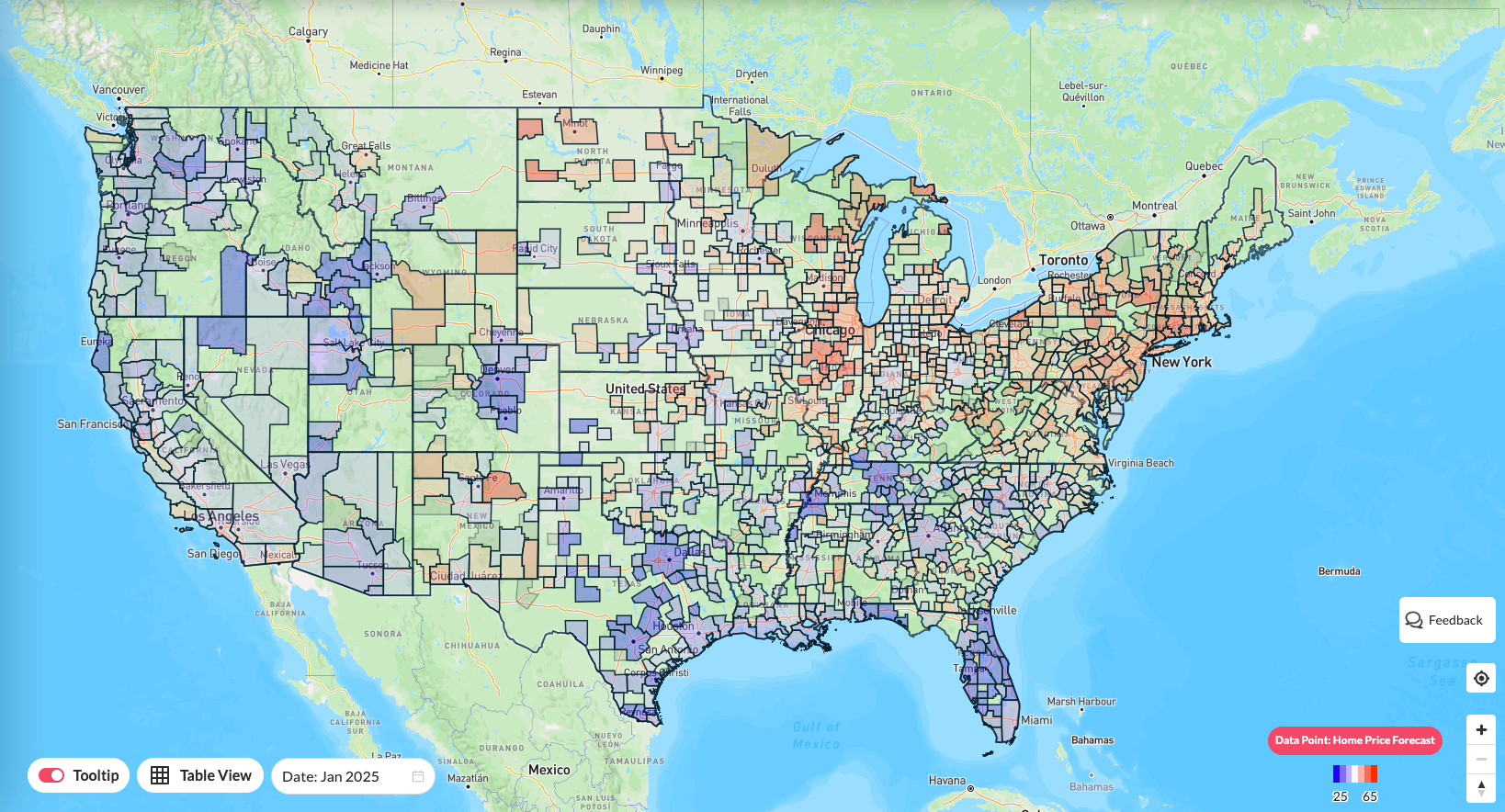
Reventure App provides housing market forecasts by city and ZIP code, helping you see where prices are rising, falling, or at risk of decline. The platform combines real-time data with forward-looking analysis to give you a clearer picture of local market conditions.
You can explore trends in your area and access detailed forecasts by visiting reventure.app and signing up for a premium plan.